1. In the first chapter of Marc Shell’s Economics of Literature, The Ring of Gyges, he relates two stories about the King of Lydia, Gyges. Shell is interested in Lydia because, in Greek historiography and legend, Lydia was the birthplace of coinage, and Shell is looking for something like the primal scene of monetization.
What does this have to do with invisibility?
The logic of Shell’s chapter slowly brings together, through Greek texts, the power of the invisible and the power of money, or, more precisely, how money operates to introduce invisibility into society.
This is the context for his analysis of Gyges.
“It is not easy for us, who have used coinage for some twenty-five hundred years, to imagine the impression it made on the minds of those who first used it in their city-states. The introduction of money to Greece has few useful analogies.1° Tales of Gyges associate him with founding a tyranny in Lydia and with a power of being able to transform visibles into invisibles and invisibles into visibles. This power, as we shall see, is associated with new economic and political forms that shattered the previous world and its culture.”
Gyges was the subject of two different histories, Shell points out, in Herodotus and Plato. In Herodotus, the tale goes like this. “Candaules [the King of Lydia] fell in love with his own wife, so much that he supposed her to be by far the fairest woman in the world; and being thus persuaded of this, he raved of her beauty (eidos) to Gyges". In this version of the story, Gyges is a noble at King Candaules’s court. Candaules is so proud of her beauty that he becomes convinced that someone other than himself must witness it – Gyges. He accuses Gyges of not believing him, and thus orders Gyges to spy on the queen, his wife, when she is dressing. Gyges doesn’t want to, for to spy on the naked queen would mean, in his opinion, taking property from the King – for the queen’s eidos – her figure, is the King’s property in the same way that the King’s figure on a coin marks the coin as the King’s property. Of course, in the latter case, the property is alienated and circulates – but at no point in the circulation does the coin change its stamp.
Gyges, in the event, is hidden by the King in the Queen’s chamber, and spies upon her nakedness. However, as Gyges does this and contrives to slip out of the chamber, unbeknownst to him, the Queen spots him. The next day she calls Gyges into her presence and gives him a choice. Either she will have him killed for spying on her, or he will kill the King and rule with her over Lydia. In one way or another, she will have her honor – her aidos – avenged.
The invisibility in this story is all a matter of human invention. It is the invisibility of the person who is hidden. The story is neatly sewn together as the invisible and the visible positions change places. That the Queen’s beauty is invisible to any male gaze except the King’s (we discount, in this story, the Queen’s serving women) is the motive that sets the intrigue in motion, for her beauty is, in a sense, both undervisible and overvisible – it exists as a second visibility. The King’s love is constrained by the fact that this second visibility cannot circulate. Gyges, as the voyeur, is indeed put into a position where he, invisibly, takes possession of that second visibility – but immediately, his position is reversed by the fact that, unbeknownst to him, he is seen by the Queen when he leaves his spot. The voyeur is, in turn, spied upon. A trope we find, incidentally, in Sartre's Being and Nothingness. And finally, of course, the two come together in a plot to overthrow the King. Here, they become conspirators in a secret – a relative of the invisible and the hidden.
Plato’s tale is better known. It is told by Glaucon in The Republic. The personages and terms, here, are rearranged a bit. Gyges is not a noble in this story, but a shepherd. Then one day…
“After a great deluge of rain and an earthquake, the ground opened and a chasm appeared in the place where he was pasturing; and they say that he went down and wandered into the chasm; and the story goes that he beheld other marvels there and a hollow bronze horse with little doors, and that he peeped in and saw a corpse within, as it seemed, of more than mortal stature, and that there has nothing else (allo men ouden) but a gold ring on its hand, which he took off and went forth.”
This ring, it turns out, has the power to make its possessor invisible and then visible again. "Learning that the ring made him invisible, he immediately contrived to be one of the messengers of the king. When he arrived, he committed adultery with the king's wife and, along with her, set upon the king and killed him. And so he took over the rule".
The fable of Gyges is a limit case meant to throw light on the question of justice. If we have the power to escape the power of justice – the armed power of the state - by becoming invisible, would we continue to be just? Socrates argument is that the cause of behaving justly does not tell us the nature of justice – rather, justice is good in itself. “We have met all the.. . demands of the argument and we have not invoked the rewards and reputes of justice as you said [the poets] do, but we have proved that justice in itself is the best thing for the soul in
itself, and that the soul ought to do justice whether it possess the ring of Gyges or not, or the Helmet of Hades to boot".
Shell’s argument is that we must go back to the terms of the story – the antithesis of the visible and the invisible – to understand how it works textually in the Republic, in which the power of money is at work as an irritant. First, he cites early commentators on Herodotus’ story, which introduce the features that coalesce, later, in Gyges’s ring.
“That the queen could see Gyges in the bedroom indicates that she possessed not only a power to make things invisible but also a corresponding power (as invisible spy) to make visible to herself things that were invisible to other people. Ptolemaeus Chennus writes that the eyes of "the wife of [Clandaules. . . had double pupils, and she was extremely sharp sighted, being the possessor of the dragon-stone. This is how she came to see Gyges as he passed through the door.” The dragonstone has an opposite effect from the magic ring. In one case the talisman makes people invisible; in the other case, it makes people visible: taken together, their power makes things visible or invisible. This is the power of Platonic Gyges. It is also the power of the archetypal tyrant.”
Shell, going back to the notion that the King possesses a property in the appearance of the wife, alludes to the Greek distinction between two forms of transaction.
“ousia phanera is property whose transfer was seen by others, and ousia aphanB is property whose transfer was not seen. (In a visible transfer, the buyer and seller might exchange a symbolic deposit not as part of the purchase price but as a visible sign of their agreement.) The second meaning of the opposition involves money: ousia phanera is a nonmonetary commodity (such as land or "real" estate) andousia aphanēs is money (such as a coin).”
Which brings us to our second history.
2. An Athenian farmer, Chremylus, goes to Apollo’s temple at Delphi to ask advice from the God. Chremylus has been one of Socrates’ kind – he has done good all his life. But all around him, he has seen wealth go to the worst, the cunning, those who are incompetent in everything except plundering; more, he has seen honesty positively punished. Socrates, of course, extolled justice even if it put the just man in danger of losing his life. But this is to put the question on the level of the individual: how about a society in which the just man always loses? Is it just for a man to condemn his children to pain and poverty by teaching them to be just, thus reproducing the social conditions that make for injustice? Chremylus is too good not to be worried about how his son will make out if he follows his father’s path. Thus, he wants to know whether he should raise his son to be unjust, a criminal, and thus spare the boy the pain that the father has known.
The oracle gives him a typically oblique judgment – the first person he meets, returning to Athens, he is to talk to and take into his home.
The man he meets is blind. His clothes are ragged and dirty. Chremylus decides he wants to know the wretch’s story, and even threatens the blind man with his slave, Cario, if he won’t tell it.
“CARIO. If you don't speak, you wretch, I will surely do you an ill turn.
PLUTUS. Friends, take yourselves off and leave me.
CHREMYLUS. That we very certainly shan't.
CARIO. This, master, is the best thing to do. I'll undertake to secure him the most frightful death; I will lead him to the verge of a precipice and then leave him there, so that he'll break his neck when he pitches over.
CHREMYLUS. Well then, I leave him to you, and do the thing quickly.
PLUTUS. Oh, no! Have mercy!
CHREMYLUS. Will you speak then?
PLUTUS. But if you learn who I am, I know well that you will ill-use me and will not let me go again.
CHREMYLUS. I call the gods to witness that you have naught to fear if you will only speak.
PLUTUS. Well then, first unhand me.
CHREMYLUS. There! we set you free.
PLUTUS. Listen then, since I must reveal what I had intended to keep a secret. I am Plutus.”
Chremylus is, of course, skeptical of this story. Plutus is the god of wealth – the man before him looks like the product of the worst poverty. The images seem irreconcilable.
“CHREMYLUS. But tell me, whence come you to be so squalid?
PLUTUS. I have just left Patrocles' house, who has not had a bath since his birth.[740]
CHREMYLUS. But your infirmity; how did that happen? Tell me.
PLUTUS. Zeus inflicted it on me, because of his jealousy of mankind. When I was young, I threatened him that I would only go to the just, the wise, the men of ordered life; to prevent my distinguishing these, he struck me with blindness! so much does he envy the good!
CHREMYLUS. And yet, 'tis only the upright and just who honour him.
PLUTUS. Quite true.
CHREMYLUS. Therefore, if ever you recovered your sight, you would shun the wicked?
PLUTUS. Undoubtedly.
CHREMYLUS. You would visit the good?
PLUTUS. Assuredly. It is a very long time since I saw them.”
As A.M. Bowie has observed, Plutus’ story is paralleled by the story of Prometheus. Just as Prometheus, out of love for mankind, steals fire from the gods – and is punished for it by Zeus – so, too, the god of wealth, when he can see, intends to distribute money only to those who are upright – to, in effect, give money to the just.
Blindness is invisibility reversed – instead of the invisible being present to the seeing eye, the visible is made invisible by being present to the unseeing eye. But eye it still is. Aristophanes story – for this is the storyline of Aristophanes’ last play, Plutus – is a sort of variation on the Gyges story, substituting an immortal for a mortal and blindness – a sightless presence – for invisibility – a presence that can’t be seen. In the course of the play, Plutus’s sight is restored – and initiates a golden age of just deserts. What interests me is that, although Zeus’s treatment binds together the two mythical figures, it is Prometheus who survives, in the collective imagination, as the hero. The romantics, including Marx, were attracted to the Prometheus myth in that it countered Christian meekness and pulled away the veil from the violence of the established order. But the blessings of a seeing Plutus did not inspire the poets. Yet, the attempt to make Plutus see, the dream of the seeing god of wealth, has been the ardent pursuit, the mythic ideal, of liberal society – one that finally, in a dialectical movement, returns the utopian society of the end of Aristophanes play back to the blind god, now in John Rawls’ original position, distributing the goods in society properly, restrained not by Zeus, but by Pareto optimality.
3. And then – another transformation of Gyges story – there is the story of the killing of the Chinese Mandarin.
The story is told in Pére Goriot. Rastignac is tempted by Vautrin to plot for the destruction of the rich brother of Victorine. Victorine would inherit the family wealth if her brother died – an event that Vautrin seeks to arrange through a duel. As Victorine is in love with Rastignac, it would only remain for the latter to marry the former and enjoy her wealth. The day after Vautrin reveals this plan, Rastignac consults a friend, Bianchon:
"'I'm being tortured by evil thoughts,"' Rastignac says, adding: "Have you read Rousseau?" "Yes." "Do you remember that passage in which he asks the reader what he would do if he could become wealthy by killing an old Chi-nese mandarin, without leaving Paris, just by an act of will?" "Yes." "Well then?" "Oh, I'm on my thirty-third mandarin." "Don't joke about it. Come, if it were proved to you that the thing was possible and that all you'd need to do would be nod your head, would you do it?" "Is your mandarin very old? Oh, well, young or old, healthy or paralytic, good Lord ... Oh, the devil! Well, no."
I’m quoting the passage as it appears in Carlo Ginzburg’s essay, “Killing a Chinese Mandarin: The Moral Implications of Distance”. This scene in Balzac is, of course, the seed for much that has followed in the novel - for instance, Raskolnikov’s problem in Crime and Punishment falls out along these lines, as Grossman has pointed out in his study of Doestoevsky. As I recall, Czeslaw Milosz devoted an essay to Rastignac’s problem – although I can’t find it now. But Ginzburg’s essay is exceptional in following the trace of the motifs that finally find their place in this mistaken reference to Rousseau. It is rather Diderot, as Ginzburg points out, who is Rastignac’s predecessor here. Diderot presents the problem of distance and conscience first in the Dialogue Between a Father and a Son, and later in Supplement to the Voyage of Bouganville. In the former, the story is told of a hatter who steals the inheritance of his dead wife from her family. The family had the legal right to it; the hatter, however, had taken care of his invalid wife for eighteen years. Finally, the hatter decides to flee with the money to Geneva. At this point, Diderot writes:
"We agreed," Diderot writes, "that perhaps distance in space or time weakened all feelings and all sorts of guilty conscience, even of crime. The assassin, removed to the shores of China, can no longer see the corpse which he left bleeding on the banks of the Seine. Remorse springs perhaps less from horror of oneself than from fear of others; less from shame at what one has done than from the blame and punishment it would bring if it were found out."
And so China, distance and murder come together. But the terms are reversed, of course, in Rastignac’s tale – which may well figure the reverse of the terms of adventure as eighteenth century colonialism, with its slavery and sugar, gives way to nineteenth century imperialism, with its markets and opium.
Saturday, November 20, 2010

Wednesday, November 17, 2010
note to homo oeconomicus 1

Mill, in his influential System of Logic, devoted Book six to the logic of the sciences of human nature, which he called ethology – the science of character. His first purpose in writing this chapter is to defend the notion that social sciences are exact sciences – that is, that they express laws, in the same way that the phenomena studied by astronomers or meteorologists express laws. His second point is that ethology is a deductive science – not an experimental one: “Are the laws of the formation of character susceptible of a satisfactory investigation by the methods of experimentation? Evidently not: because even if we suppose unlimited power of varying the experiment, (which is abstractedly possible, though no one but an oriental despot either has that power, or if he had, would be disposed to exercise it,) a still more essential condition is wanting; the power of performing any of the experiments with scientific accuracy.” (517)
This breathes the air of liberal doctrine. From Mill to Hayek, the idea that some central despotic power could or would ‘experiment’ with humans evokes the moral outrage that is the correlate of the liberal philosophy of markets. Markets, on the other hand, exert no despotism; markets, being free, free men from despotism.
In fact, Mill’s observation seems, from the point of view of the exact sciences, correct. And yet, from the point of view of the governance of men, it seems to miss the point. Almost any rule – whether derived from the management of a business enterprise or from a government agency – is in the manner of an experiment. It organizes human activity in a certain way. Looked at pragmatically, humans go from experiment to experiment – that is, from norm to norm.
And this brings us back to the question of the myth of homo oeconomicus. When I asked, parodying the title of Veyne’s work, if the moderns believe their myth, I am asking about how the myth affects the moderns. My hasty answer is that slowly, inexorably, a myth that was devised to explain society has become the myth to which society is being sacrificed. This is its ‘demonic’ power. In creating an economics that features, centrally, homo oeconomicus, the economists – in spite of their protest that homo oeconomicus is an ideal type, a fiction binding together the models of a science – embarked upon an experiment. But one must be careful here: for the power to design this experiment is surely not in the hands of the economists. Rather, the myth congeals into a recognizable figure central elements of the capitalist order, and in so doing reinforces them. It is as if an experiment were proposed by an occidental despot, in which the question explored is: can we devise a society in which homo oeconomicus is the norm?
In protesting that the rational economic agent is not meant to represent the typical human, with his ‘perturbatory’ human features, Walras was doubtless being sincere. But he was ignoring the unconscious, utopian side of his invention. When physicists devise their model of the atom, it is without a thought that the atom should take counsel from the physicists. But the same can’t be said for the economists.
To leap ahead: I don’t propose to become the biographer of homo oeconomicus because I delight in his hijinks. I propose to do so because I think the experiment is turning out badly.
Looking at global capitalism at the end of the Great Moderation, I am reminded of the end of the Soviet Union. In the eighties, with actually realized socialism in place, it was time for the New Soviet Man to emerge. As he did so, in the confident words of the regime’s ideologists, a satiric portrait of him – Homo Sovieticus – was promoted in dissident circles. But even Homo Sovieticus could not quite capture the forces that were steadily undermining the Soviet imperium. As the economy became more and more unreal, an empire of soft budget constraints – factories whose products were obsolete by the time they reached the end of the assembly line, workers who diverted the chemicals needed for their machines into beverages to be fermented and drunk on the line, etc – the New Soviet Man became more and more real.
A similar, unacknowledged process is taking place in the capitalist world, which is busy ignoring the signs of imminent environmental and moral collapse. As the experiment to make homo oeconomicus real effects the life histories of billions of people, the mixed exchange matrix that actually makes capitalism livable is being eroded. In the end, when the life of the fiction negates the life of the flesh, the fiction will die – but, if history is any guide, the death throes will make the life of the flesh miserable in some vast and catastrophic way.
Monday, November 15, 2010
homo oeconomicus 1
A mystery surrounds the birth of homo oeconomicus. His ‘hour of birth” is disputed. His parents are many – and they are all males. He has been traced back to Plato’s philosopher king – and more plausibly, to the all knowing fiction devised by Laplace to explain the explicability of the mechanistic universe: “An intelligence which in a given instant would know all the forces of which nature is animated and the respective situation of the beings that compose it, if it were besides of a vast enough scale to submit these givens to analysis, would embrace in the same formula the movements of the greatest bodies in the universe and those of the lightest atom: nothing would be uncertain for her, and the future, as the past, would be present to her eyes.”
Homo oeconomicus, of course, has not yet been elevated to a principle as universal as all that. But he is still a hero, and as such, a piece of the marvelous that no plebian copulation can explain. The hero’s birth, which is always a matter of cultic interest, divides us into initates and the uninitiated – and never more so than in the mysteries celebrated in the name of the rational maximizer. We understand the mysteries or we don’t. And the priests work to ensure that the mysteries become ever more mysterious and ensnaring as we enter the sacred places.
The phrase appears, all at once, in the 1890s in the works of several political economists. In an essay from 1891, Lasciate Fare, Lasciate Passare, Vilfredo Pareto writes: “now the science of economics tends to separate itself into two branches. In the first case, one departs from some postulates, in fact only one postulate, that of hedonism, and having assumed a homo oeconomicus whose actions are hedonistic in every, one establishes a workable basis of a deductive science that represents what would happen in a society composed of such men. In the other, one brings together like facts and tries to deduce laws from them, which cannot be non-empirical…” [cited by Michael McLure 2001, 41] Leon Walras in 1898 writes: “In fact, the man who has needs, who divides labor and who, in view of the maxima satisfaction of his needs sells his services and buys products in quantities such that his scarcities should be reciprocal to the virtually exchangeable quantities of goods and services, homo oeconomicus, is also he who is endowed with sympathy and an aesthetic sense, with understanding and reason, with a free and conscious ill, homo ethicus; and both are man living in society, cultivating art, making science, having manners and morals and practicing industry, in brief, homo coenonicus.” 1898 Irving Fisher, reviewing a book by the Italian economist, Matteo Pantaleone in 1898, asks: “Is it necessary, for instance, to predicate of “homo oeconomicus” perfect foresight and papal infallibility (pp. 87, 240)…”
In fact, even as homo oeconomicus steps into history, who and what he is, his properties, what he is for, the destiny that lies before him, the charge he must keep, all are subject to doubt and dispute. That he is a fiction is granted all the way around: but isn’t it true of all sciences that they operate by creating useable fictions? That is, generalizations or ideals, models or laws, that are not used to explain every physical occurrence, since occurrences happen in the friction of altering circumstance.
Walras, in 1875, corresponded with the French philosopher, Renouvier, about the justification for his conception of the economic actor - this, one should note, is before the homo oeconomicus was named, but not before the sages were dimly conceiving of him. Of his prehistory we will speak later.
Renouvier wrote that “psychological, social and other conditions are of a nature to introduce a separation between the previsions of mathematical economics and the determination of economic facts.” Walras responded, defending his Elements of Pure Political Economics: “It is exclusively a work of theory, in which I believed I was able to make an abstraction of ‘psychological, social and other conditions” of which you speak as accessory perturbations. [Cited by Donald Walker in Etudes Walrrassiennes, 2004]
This ability to put aside the perturbations of society and psychology, and to abstract the unit of pleasure – or utility – to a mathematical quantity that is, at one and the same thing, the object of some agent’s direst predilection and a mere variable for any pleasure whatsoever, is what characterizes the most heroic act of the homo oeconomicus. It is not so much that he is a calculator – it is that he is a substituter.
Homo oeconomicus, of course, has not yet been elevated to a principle as universal as all that. But he is still a hero, and as such, a piece of the marvelous that no plebian copulation can explain. The hero’s birth, which is always a matter of cultic interest, divides us into initates and the uninitiated – and never more so than in the mysteries celebrated in the name of the rational maximizer. We understand the mysteries or we don’t. And the priests work to ensure that the mysteries become ever more mysterious and ensnaring as we enter the sacred places.
The phrase appears, all at once, in the 1890s in the works of several political economists. In an essay from 1891, Lasciate Fare, Lasciate Passare, Vilfredo Pareto writes: “now the science of economics tends to separate itself into two branches. In the first case, one departs from some postulates, in fact only one postulate, that of hedonism, and having assumed a homo oeconomicus whose actions are hedonistic in every, one establishes a workable basis of a deductive science that represents what would happen in a society composed of such men. In the other, one brings together like facts and tries to deduce laws from them, which cannot be non-empirical…” [cited by Michael McLure 2001, 41] Leon Walras in 1898 writes: “In fact, the man who has needs, who divides labor and who, in view of the maxima satisfaction of his needs sells his services and buys products in quantities such that his scarcities should be reciprocal to the virtually exchangeable quantities of goods and services, homo oeconomicus, is also he who is endowed with sympathy and an aesthetic sense, with understanding and reason, with a free and conscious ill, homo ethicus; and both are man living in society, cultivating art, making science, having manners and morals and practicing industry, in brief, homo coenonicus.” 1898 Irving Fisher, reviewing a book by the Italian economist, Matteo Pantaleone in 1898, asks: “Is it necessary, for instance, to predicate of “homo oeconomicus” perfect foresight and papal infallibility (pp. 87, 240)…”
In fact, even as homo oeconomicus steps into history, who and what he is, his properties, what he is for, the destiny that lies before him, the charge he must keep, all are subject to doubt and dispute. That he is a fiction is granted all the way around: but isn’t it true of all sciences that they operate by creating useable fictions? That is, generalizations or ideals, models or laws, that are not used to explain every physical occurrence, since occurrences happen in the friction of altering circumstance.
Walras, in 1875, corresponded with the French philosopher, Renouvier, about the justification for his conception of the economic actor - this, one should note, is before the homo oeconomicus was named, but not before the sages were dimly conceiving of him. Of his prehistory we will speak later.
Renouvier wrote that “psychological, social and other conditions are of a nature to introduce a separation between the previsions of mathematical economics and the determination of economic facts.” Walras responded, defending his Elements of Pure Political Economics: “It is exclusively a work of theory, in which I believed I was able to make an abstraction of ‘psychological, social and other conditions” of which you speak as accessory perturbations. [Cited by Donald Walker in Etudes Walrrassiennes, 2004]
This ability to put aside the perturbations of society and psychology, and to abstract the unit of pleasure – or utility – to a mathematical quantity that is, at one and the same thing, the object of some agent’s direst predilection and a mere variable for any pleasure whatsoever, is what characterizes the most heroic act of the homo oeconomicus. It is not so much that he is a calculator – it is that he is a substituter.
Thursday, November 11, 2010
Doing intellectual history: the Great and Little Tradition
Is intellectual history about intellectuals? Or is it about the intellectual spirit of a given epoch and culture, the mix of ideas and assumptions? Is it, in other words, about what James Scott has called the Great Tradition and the Little Tradition?
Recall what Scott says about the two traditions in his seminal essays about peasant revolts from the seventies: the Great Tradition, which is usually developed in the urban setting by ‘high culture’ intellectuals, then spreads out into the rural setting, where it encounters the set of beliefs and symbols held by peasants, or the Little Tradition. The process of dissemination, however, is full of slippages:
“My contention … will be that there is something systematic about this slippage between religious and political ideas as understood and practiced in the city and their little tradition variants in the countryside. This slippage, I argue, is scarcely random or accidental - quite simply because the social characteristics of an idea's great tradition adherents differ in clear and identifiable ways from the social characteristics of its little tradition ad-herents. The former, taken broadly, live in large differentiated cities where much of their life is governed by impersonal legal norms, are generally middle or upper class, and are masters of a written tradition. The latter, also taken broadly, live in small, relatively homogeneous villages where much of their life is governed by local custom, are generally lower-class subsistence-oriented producers, and are part of an oral tradition. To the extent that this gross characterization has any validity, it alerts us to the fact that religious and political ideas may each be transformed in comparable ways as they reach the peasantry. If folk Catholicism is to the New Testament and St. Peter as folk communism is to Das Kapital and Lenin, we may then be able to say something meaningful about folk variants of great tradition ideas and practices in general.”
Scott’s contention originally conceives of the Great Tradition in terms of the systematic possibilities afforded by the text – with its rules of relevance, truth, consistency, etc. – and the Little Tradition in terms of the possibilities of the oral – with the veridical weight it puts on the relationship between speaker and speech, its subordination of coherence to a host of exceptions, etc. This looks much like an old division between those with and those without the book, or writing. However, if the framework here is creaky, I think it is useful to have these two traditions in mind when trying to understand the past from an anthropologically informed perspective. I would, however, add to the dialectic between them that the Great Tradition continually distances itself from a past that it casts as ‘superstitious’ or outmoded – that it describes in Little Tradition terms – and that this perception is not completely false. The little tradition is not completely un-textualizable. On the contrary, it thrives on what Bakhtin called the “word” – on the maxim, proverb, verse, fable, figure, divination – which in turn operates as a sort of doxic disturbance within the Great Tradition.
In order to represent the intellectual landscape of, say, French culture in the seventeenth century, it is best to keep in mind the existence of both of these traditions. An intellectual history that takes up, say, Descartes, Gassendi, Pascal, etc., may miss important things about French intellectual culture. For instance, we know that in the 17th century, both the Nahua in Mexico and the French in the countryside, and in churches and parlements, believed human beings could change themselves into other animals. The French belief in this fact was confirmed over and over in many witch trials. The difference between the Nahua and the French was, in fact, not so much a difference in belief as in governance, which allowed certain figures in the Great Tradition the discursive possibility of examining the human body and, in the end, doubting that it could change into the body of other animals. This condition was the result of certain unique features of social control in France that were not generated by the Nahua – the policing of belief, for example.
Of course, members of the “high culture” could very well use witchcraft beliefs – even if they didn’t share them – tactically.
Take the sad tale of Baron and Baronne Beausoleil. This tale is less known than it should be – feminist historians, take note! Baronne Beausoleil, born Martine de Bertereau, came from a noble French family in Touraine or Berry. Her husband, Jean du Châtelet, Baron de Beausoleil and D’Auffembach, was a 17th century virtuoso. His nephew was a well known surgeon and Cartesian. Beausoleil was a geologist and alchemist, who became well enough known for his work on mineralogy to attract the attention of the Holy Roman Emperor, Rudolph, and his successor, who made him commissioner general of the mines of Hungary. He was enticed back to France by officials of the court of Henry IV. The French state was alarmed by the disarray in which they found the French mining industry. Thus, Beausoleil – who worked with his wife, Martine – was given broad powers to restart the mining sector in the provinces.
In doing so, they established a base at Morlaix. It was there that their first misadventure befell them: a priest, a Prevot Provincial she names, charmingly, Touche-Grippé, ransacked their chateau while they were away on some survey of mines in the area. He justified his search by alluding to his suspicion that they were dabbling in magic. After all, how could they succeed in their task if they were not using magic? One has to remember, too, that in the early 1600s, magic could be a synonym for science – it is used with this signification in Porta and Bacon.
Rather remarkably, Martine seems to have been entrusted with the task of public relations for the pair – which is how we know of this first, and as it turns out, premonitory dustup with the priest. For a while, the couple left France, but they were enticed back under Louis XIII. It was then they made the mistake of using their own fortune to explore for and open mines – thinking, evidently, that they would be reimbursed by the state.
Such were the circumstances when she published her pamphlet, La Restitution de Pluton. In it, she tackles the subject of her sex:
But how about what is said by others about a women who undertakes to dig holes in and pierce mountains: this is too bold, and surpasses the forces and industry of this sex, and perhaps, there is more empty words and vanity in such promises (vices for which flighty persons are often remarked) than the appearance of truth. I would refer this disbeliever, and all those who arm themselves with such and other like arguments, to profane histories, where they will find that, in the past, there have been women who were not only bellicose and skilled in arms, but even more, expert in arts and speculative sciences, professed so much by the Greeks as by the Romans.”
And here, after alluding to some classical instances, she gives her bonafides in the “occult art”: having descended myself in the shafts and caverns of mines (although they are frighteningly deep), as those of gold and silver in Potosi, in the Kingdom of Peru…In those of Neusoln, Cremitz, and Schemnitz, in the Kingdom of Hungary…”
Which has given rise to the report that she actually went across the ocean on some expedition to visit Peru. One wonders if this claim is exaggerated – it would certainly be interesting. And it is politically possible that the Beausoleils, who worked for the Habsburgs, could have gotten such passage. Of course, right after this claim comes another – about what is met with in the mines of Hungary and Germany: .. where one often meets small dwarves, of about three or four palms in height, old, and clothed like those who work in the mines, to wit with an old short jacket, and a leather vest, which hangs down over most their body, with a white cape with a hood, a lamp, and a stick in their hand, horrible specters to those who have not long had experience in the descent into the mine.”
The Restitution of Pluto is a rather strange title for a mining manual – for Pluto to receive restitution, one would think, something was called for on the order of returning ore – a sort of antimining. But the restitution that Baronne Beausoleil has in mind is the restitution of the fortune she and her husband spent on exploring mines for the French government. In addition, she complains of having had the household maps and documents concerning mining pilfered by Touche-Grippé. In the course of her pamphlet, she also undertakes to show how astrology and the ‘wand’ used by miners were employed in renewing old and worn out mines.
Perhaps this was the excuse that provided the base for her downfall. The case of baron and baronne Beausoleil is curious, in that we have no record of their trial, no documentation to tell us why they were separated and imprisoned, Martine de Bertereau in Vincennes, her husband, Jean du Châtelet, Baron de Beausoleil and D’Auffembach, in the Bastille. Martine was imprisoned with her daughter. The last indication we have of Martine, the woman who may have plunged into the fearsome mines of Potosi, and certainly did go down into many Hungarian and German mines, is contained in the letters of the Abbé de Saint-Cyran, who was imprisoned in Vincennes as a Jansenist priest. According to Saint-Cyran, Martine was ‘assez mal en ordre’ - she wore threadbare clothes. He was able to procure some better clothes for both of them. He also wrote to a friend as a favor for Martine, requesting him to inquire about the couple’s daughter, Anne du Châtelet, who had been left in the care of one of their friends. Anne had been taught Latin in order to “render her capable of the science of mining, which is hereditary in the family”. In another letter, Saint-Cyran defends Châtelet from the accusation of necromancy. His interest in astrology, Saint-Cyran assures his correspondent, was entirely scientific – the kind of divination that Saint Thomas approved of.
The Great Tradition is built on many bones, and some of the bones it grinds are of unfortunates who are caught in out of joint moments, and purged from our collective memory.
Recall what Scott says about the two traditions in his seminal essays about peasant revolts from the seventies: the Great Tradition, which is usually developed in the urban setting by ‘high culture’ intellectuals, then spreads out into the rural setting, where it encounters the set of beliefs and symbols held by peasants, or the Little Tradition. The process of dissemination, however, is full of slippages:
“My contention … will be that there is something systematic about this slippage between religious and political ideas as understood and practiced in the city and their little tradition variants in the countryside. This slippage, I argue, is scarcely random or accidental - quite simply because the social characteristics of an idea's great tradition adherents differ in clear and identifiable ways from the social characteristics of its little tradition ad-herents. The former, taken broadly, live in large differentiated cities where much of their life is governed by impersonal legal norms, are generally middle or upper class, and are masters of a written tradition. The latter, also taken broadly, live in small, relatively homogeneous villages where much of their life is governed by local custom, are generally lower-class subsistence-oriented producers, and are part of an oral tradition. To the extent that this gross characterization has any validity, it alerts us to the fact that religious and political ideas may each be transformed in comparable ways as they reach the peasantry. If folk Catholicism is to the New Testament and St. Peter as folk communism is to Das Kapital and Lenin, we may then be able to say something meaningful about folk variants of great tradition ideas and practices in general.”
Scott’s contention originally conceives of the Great Tradition in terms of the systematic possibilities afforded by the text – with its rules of relevance, truth, consistency, etc. – and the Little Tradition in terms of the possibilities of the oral – with the veridical weight it puts on the relationship between speaker and speech, its subordination of coherence to a host of exceptions, etc. This looks much like an old division between those with and those without the book, or writing. However, if the framework here is creaky, I think it is useful to have these two traditions in mind when trying to understand the past from an anthropologically informed perspective. I would, however, add to the dialectic between them that the Great Tradition continually distances itself from a past that it casts as ‘superstitious’ or outmoded – that it describes in Little Tradition terms – and that this perception is not completely false. The little tradition is not completely un-textualizable. On the contrary, it thrives on what Bakhtin called the “word” – on the maxim, proverb, verse, fable, figure, divination – which in turn operates as a sort of doxic disturbance within the Great Tradition.
In order to represent the intellectual landscape of, say, French culture in the seventeenth century, it is best to keep in mind the existence of both of these traditions. An intellectual history that takes up, say, Descartes, Gassendi, Pascal, etc., may miss important things about French intellectual culture. For instance, we know that in the 17th century, both the Nahua in Mexico and the French in the countryside, and in churches and parlements, believed human beings could change themselves into other animals. The French belief in this fact was confirmed over and over in many witch trials. The difference between the Nahua and the French was, in fact, not so much a difference in belief as in governance, which allowed certain figures in the Great Tradition the discursive possibility of examining the human body and, in the end, doubting that it could change into the body of other animals. This condition was the result of certain unique features of social control in France that were not generated by the Nahua – the policing of belief, for example.
Of course, members of the “high culture” could very well use witchcraft beliefs – even if they didn’t share them – tactically.
Take the sad tale of Baron and Baronne Beausoleil. This tale is less known than it should be – feminist historians, take note! Baronne Beausoleil, born Martine de Bertereau, came from a noble French family in Touraine or Berry. Her husband, Jean du Châtelet, Baron de Beausoleil and D’Auffembach, was a 17th century virtuoso. His nephew was a well known surgeon and Cartesian. Beausoleil was a geologist and alchemist, who became well enough known for his work on mineralogy to attract the attention of the Holy Roman Emperor, Rudolph, and his successor, who made him commissioner general of the mines of Hungary. He was enticed back to France by officials of the court of Henry IV. The French state was alarmed by the disarray in which they found the French mining industry. Thus, Beausoleil – who worked with his wife, Martine – was given broad powers to restart the mining sector in the provinces.
In doing so, they established a base at Morlaix. It was there that their first misadventure befell them: a priest, a Prevot Provincial she names, charmingly, Touche-Grippé, ransacked their chateau while they were away on some survey of mines in the area. He justified his search by alluding to his suspicion that they were dabbling in magic. After all, how could they succeed in their task if they were not using magic? One has to remember, too, that in the early 1600s, magic could be a synonym for science – it is used with this signification in Porta and Bacon.
Rather remarkably, Martine seems to have been entrusted with the task of public relations for the pair – which is how we know of this first, and as it turns out, premonitory dustup with the priest. For a while, the couple left France, but they were enticed back under Louis XIII. It was then they made the mistake of using their own fortune to explore for and open mines – thinking, evidently, that they would be reimbursed by the state.
Such were the circumstances when she published her pamphlet, La Restitution de Pluton. In it, she tackles the subject of her sex:
But how about what is said by others about a women who undertakes to dig holes in and pierce mountains: this is too bold, and surpasses the forces and industry of this sex, and perhaps, there is more empty words and vanity in such promises (vices for which flighty persons are often remarked) than the appearance of truth. I would refer this disbeliever, and all those who arm themselves with such and other like arguments, to profane histories, where they will find that, in the past, there have been women who were not only bellicose and skilled in arms, but even more, expert in arts and speculative sciences, professed so much by the Greeks as by the Romans.”
And here, after alluding to some classical instances, she gives her bonafides in the “occult art”: having descended myself in the shafts and caverns of mines (although they are frighteningly deep), as those of gold and silver in Potosi, in the Kingdom of Peru…In those of Neusoln, Cremitz, and Schemnitz, in the Kingdom of Hungary…”
Which has given rise to the report that she actually went across the ocean on some expedition to visit Peru. One wonders if this claim is exaggerated – it would certainly be interesting. And it is politically possible that the Beausoleils, who worked for the Habsburgs, could have gotten such passage. Of course, right after this claim comes another – about what is met with in the mines of Hungary and Germany: .. where one often meets small dwarves, of about three or four palms in height, old, and clothed like those who work in the mines, to wit with an old short jacket, and a leather vest, which hangs down over most their body, with a white cape with a hood, a lamp, and a stick in their hand, horrible specters to those who have not long had experience in the descent into the mine.”
The Restitution of Pluto is a rather strange title for a mining manual – for Pluto to receive restitution, one would think, something was called for on the order of returning ore – a sort of antimining. But the restitution that Baronne Beausoleil has in mind is the restitution of the fortune she and her husband spent on exploring mines for the French government. In addition, she complains of having had the household maps and documents concerning mining pilfered by Touche-Grippé. In the course of her pamphlet, she also undertakes to show how astrology and the ‘wand’ used by miners were employed in renewing old and worn out mines.
Perhaps this was the excuse that provided the base for her downfall. The case of baron and baronne Beausoleil is curious, in that we have no record of their trial, no documentation to tell us why they were separated and imprisoned, Martine de Bertereau in Vincennes, her husband, Jean du Châtelet, Baron de Beausoleil and D’Auffembach, in the Bastille. Martine was imprisoned with her daughter. The last indication we have of Martine, the woman who may have plunged into the fearsome mines of Potosi, and certainly did go down into many Hungarian and German mines, is contained in the letters of the Abbé de Saint-Cyran, who was imprisoned in Vincennes as a Jansenist priest. According to Saint-Cyran, Martine was ‘assez mal en ordre’ - she wore threadbare clothes. He was able to procure some better clothes for both of them. He also wrote to a friend as a favor for Martine, requesting him to inquire about the couple’s daughter, Anne du Châtelet, who had been left in the care of one of their friends. Anne had been taught Latin in order to “render her capable of the science of mining, which is hereditary in the family”. In another letter, Saint-Cyran defends Châtelet from the accusation of necromancy. His interest in astrology, Saint-Cyran assures his correspondent, was entirely scientific – the kind of divination that Saint Thomas approved of.
The Great Tradition is built on many bones, and some of the bones it grinds are of unfortunates who are caught in out of joint moments, and purged from our collective memory.
Wednesday, November 10, 2010
logic and strategy
The other day, a friend told me about a class she is teaching. The students had to make presentations, and two of them presented about South Africa. Oddly, she said, these student seemed barely aware that once upon a time, South Africa had a racist, apartheid regime. I said (falling into my old codger routine) that I remembered the day I protested the University of Texas' investment in South Africa, along with hundreds of other students. And then I said, I now think that was a mistake.
And then I thought about it and said, no, it wasn’t a mistake. It was right to protest. It was wrong for U.T. to have that investment. But it was, at the same time, good that U.T. had an investment we couldd protest.
My reactions led me to reflect on the difference between strategy and logic.
To illustrate that difference, take the 'human rights' game. Say that there is a country - call it, a U.S.-like country, that is, one that doesn't torture and invade countries illegally, but that is nevertheless wealthy and has an interest in promoting human rights. And take a human rights violator, like, say, Iran. It would be better, in my opinion, for the U.S.-like country to recognize Iran and make investments in that country. At the same time, it would also be better for people to protest those investments and demand that the U.S.-like country boycott Iran.
Logically, these positions are incompatible. One comes to a decision fork – A or Not-A. Logically, one can’t embrace both.
Strategically, however, both may be preferable. It is preferable that Iran have an internal interest that is vulnerable to protest. And it is preferable that protest exists to make the threat of loss credible.
This is the kind of thing that Deleuze and Guattari are talking about when they speak of affirming both sides of a disjunction. One leaps, here, from logic to strategy.
Of course, there is a problem. In order for the protests to be credible, the protestors must sincerely believe in disinvesting in Iran. And in order for the investments to be credible, the investors must act credibly like investors, defending with all their might and main investment in Iran.
So – where is the strategist, given this field of beliefs? The strategist is in the position of a sort of Maxwell’s demon – or a Chinese sage. She has anchored herself to the ‘uncanny’ position within the social field. She does have a strategic goal – the strategy is meant to move Iran to another regime point. But she can’t really reveal her goal for the strategy to succeed. And she must be on both sides of the decision branch.
It is a tough life for Fortuna, the game theorist. But she must be pitiless – even with herself.
And then I thought about it and said, no, it wasn’t a mistake. It was right to protest. It was wrong for U.T. to have that investment. But it was, at the same time, good that U.T. had an investment we couldd protest.
My reactions led me to reflect on the difference between strategy and logic.
To illustrate that difference, take the 'human rights' game. Say that there is a country - call it, a U.S.-like country, that is, one that doesn't torture and invade countries illegally, but that is nevertheless wealthy and has an interest in promoting human rights. And take a human rights violator, like, say, Iran. It would be better, in my opinion, for the U.S.-like country to recognize Iran and make investments in that country. At the same time, it would also be better for people to protest those investments and demand that the U.S.-like country boycott Iran.
Logically, these positions are incompatible. One comes to a decision fork – A or Not-A. Logically, one can’t embrace both.
Strategically, however, both may be preferable. It is preferable that Iran have an internal interest that is vulnerable to protest. And it is preferable that protest exists to make the threat of loss credible.
This is the kind of thing that Deleuze and Guattari are talking about when they speak of affirming both sides of a disjunction. One leaps, here, from logic to strategy.
Of course, there is a problem. In order for the protests to be credible, the protestors must sincerely believe in disinvesting in Iran. And in order for the investments to be credible, the investors must act credibly like investors, defending with all their might and main investment in Iran.
So – where is the strategist, given this field of beliefs? The strategist is in the position of a sort of Maxwell’s demon – or a Chinese sage. She has anchored herself to the ‘uncanny’ position within the social field. She does have a strategic goal – the strategy is meant to move Iran to another regime point. But she can’t really reveal her goal for the strategy to succeed. And she must be on both sides of the decision branch.
It is a tough life for Fortuna, the game theorist. But she must be pitiless – even with herself.
Saturday, November 06, 2010
the exchange matrix
The other day, my friend M. sent me a copy of a letter that was written by an editor of a press to another person, in which the editor solicited a small essay for a line of books that would contain small, one hundred page essays on a variety of topics. M. suggested that this was definitely up my alley – and I have to agree.
So I have been thinking of carving out a small bit from my human limit project for a book to be tentatively entitled, Homo Oeconomicus: the biography of a myth. Much of what I’ve been writing lately (about the origin of the equilibrium idea in economics) would flow very easily into a book about the rise of the idea of the homo oeconomicus – the rational actor whose ectoplasmic calculations are at the center of mainstream economics. To paraphrase Paul Veyne’s book, “Did the Greeks believe their myths”, I think an essay about whether the economists believe theirs – and more importantly, how their belief has helped form the political and economic order of modernity – is worth a nice one hundred pages.
This essay would have to begin in Rouen. I’d like to start with Pascal, Boisguilbert and Fontenelle and go forward until, in the 20th and 21st century, I bump into Robert Lucas, the Ownership society and the Browne report. The essay would really be the development of a phrase of Fontenelle, who, in his Eloge de Montmort, wrote that the scientific spirit will in the end bring about the belief “that the political world as well as physics is ruled by weight, number and measurement.” The great transformation of the economic and political arrangements under capitalism, outlined by Marx and Engels in the Communist Manifesto and Karl Polanyi in the Great Transformation, took place not only in the vast recombination and recreation of everyday routines, but also in the thoughts entertained by the clerks, the policymaking intellectuals, the poets, the dissenters, the political arithmeticians, the pamphleteers and scientists, and in general the entire crowd of Burke’s “theorists”. Such is the ‘spirit’ of capitalism.
Historians have long been convinced that Adam Smith’s conjectural history is basically right Smith puts “commercial society”, or a society based on the cash nexus, at the endpoint of history. Myself, I want to dispute one of the premises of this idea, which is that we have gone from a society in which the dominant form in which the matrix of exchange occurs is barter to one in which the dominant form is money. I think this claim is made, to an extent, by engaging in a definitional tour de passe-passe, in which a system of exchanges is mysteriously expelled from economics, and is then, as mysteriously, crunched into a system of rational choice, a method by which mountains regularly give birth to mice, and all is dissolved in the triviality of a decisional form without, of course, explaining decisions at all. I take the term “exchange matrix” from Robert Cowen, who was very concerned with the fact that, in the Walrasian and neo-Walrasian schemas which are at the heart of neo-classical economics, the stripping away of the “veil of money”, which is meant to help us understand the self-regulating nature of money, is the equivalent of the claim that, in essence, money simply is a refined form of barter. D. Dillard, in The Barter Illusion, helps us to see what Cowen tries to show formally in matrix form – namely, that the idea that money is barter undergirds a completely fictitious view of firms, which premise that they exist solely for the sake of consumption. As Dillard – echoing Marx – points out, a firm’s output is ‘reconstituted as money capital” for the very good reason that firms do not exist – except on the most abstract level – to increase consumption. “What is real from the point of view of the objective of the firm is money.” As Dillard points out, “A corollary of the barter illusion is that money is neutral with regard to output and unemployment.”
All of which is one part of the illusion of the pure exchange system – that is, that barter and money are essentially the same. So the first part of understanding the myth of homo oeconomicus is to remove the illusion of the equivalence of money and barter, and the corollary illusion that, on the one hand, there is a pure barter system, and, on the other hand, that there is an equilibrium towards which markets tend.
Homo Oeconomicus, that eternal calculator of profit, operates within these larger mythical frameworks. My proposal is, firstly, to go from the mixed matrixes of the late medieval European economies up through the genesis of political arithmetic in the early modern period by looking at some plays – I’m thinking of Everyman, King Lear, the Alchemist, L’avare; secondly, to look at some analogies of the wheel – the wheel of Fortune or Nemesis, the circulation of the blood, and the circulation of money; thirdly, to examine Pascal’s meditations on the difference between reasoning and authority, against the background of Pascal’s development of a theory of probabilities based on the example of the game; fourthly, to examine the Enlightenment development of man the machine as man the calculating machine; fifthly, to go from Smith’s pin-factory to Marx’s theory of alienation, with its deep reach into how he conceives the economic sphere; sixthly, to discuss Polanyi’s double movement – that fold in the development of Capitalist culture in which the state intervenes as a guarantor (of social welfare, of banks, of farming culture, etc.); and finally, to discuss the social coordinates of individualism.
This may be too ambitious. Hey, commentors, tell me what you think!
So I have been thinking of carving out a small bit from my human limit project for a book to be tentatively entitled, Homo Oeconomicus: the biography of a myth. Much of what I’ve been writing lately (about the origin of the equilibrium idea in economics) would flow very easily into a book about the rise of the idea of the homo oeconomicus – the rational actor whose ectoplasmic calculations are at the center of mainstream economics. To paraphrase Paul Veyne’s book, “Did the Greeks believe their myths”, I think an essay about whether the economists believe theirs – and more importantly, how their belief has helped form the political and economic order of modernity – is worth a nice one hundred pages.
This essay would have to begin in Rouen. I’d like to start with Pascal, Boisguilbert and Fontenelle and go forward until, in the 20th and 21st century, I bump into Robert Lucas, the Ownership society and the Browne report. The essay would really be the development of a phrase of Fontenelle, who, in his Eloge de Montmort, wrote that the scientific spirit will in the end bring about the belief “that the political world as well as physics is ruled by weight, number and measurement.” The great transformation of the economic and political arrangements under capitalism, outlined by Marx and Engels in the Communist Manifesto and Karl Polanyi in the Great Transformation, took place not only in the vast recombination and recreation of everyday routines, but also in the thoughts entertained by the clerks, the policymaking intellectuals, the poets, the dissenters, the political arithmeticians, the pamphleteers and scientists, and in general the entire crowd of Burke’s “theorists”. Such is the ‘spirit’ of capitalism.
Historians have long been convinced that Adam Smith’s conjectural history is basically right Smith puts “commercial society”, or a society based on the cash nexus, at the endpoint of history. Myself, I want to dispute one of the premises of this idea, which is that we have gone from a society in which the dominant form in which the matrix of exchange occurs is barter to one in which the dominant form is money. I think this claim is made, to an extent, by engaging in a definitional tour de passe-passe, in which a system of exchanges is mysteriously expelled from economics, and is then, as mysteriously, crunched into a system of rational choice, a method by which mountains regularly give birth to mice, and all is dissolved in the triviality of a decisional form without, of course, explaining decisions at all. I take the term “exchange matrix” from Robert Cowen, who was very concerned with the fact that, in the Walrasian and neo-Walrasian schemas which are at the heart of neo-classical economics, the stripping away of the “veil of money”, which is meant to help us understand the self-regulating nature of money, is the equivalent of the claim that, in essence, money simply is a refined form of barter. D. Dillard, in The Barter Illusion, helps us to see what Cowen tries to show formally in matrix form – namely, that the idea that money is barter undergirds a completely fictitious view of firms, which premise that they exist solely for the sake of consumption. As Dillard – echoing Marx – points out, a firm’s output is ‘reconstituted as money capital” for the very good reason that firms do not exist – except on the most abstract level – to increase consumption. “What is real from the point of view of the objective of the firm is money.” As Dillard points out, “A corollary of the barter illusion is that money is neutral with regard to output and unemployment.”
All of which is one part of the illusion of the pure exchange system – that is, that barter and money are essentially the same. So the first part of understanding the myth of homo oeconomicus is to remove the illusion of the equivalence of money and barter, and the corollary illusion that, on the one hand, there is a pure barter system, and, on the other hand, that there is an equilibrium towards which markets tend.
Homo Oeconomicus, that eternal calculator of profit, operates within these larger mythical frameworks. My proposal is, firstly, to go from the mixed matrixes of the late medieval European economies up through the genesis of political arithmetic in the early modern period by looking at some plays – I’m thinking of Everyman, King Lear, the Alchemist, L’avare; secondly, to look at some analogies of the wheel – the wheel of Fortune or Nemesis, the circulation of the blood, and the circulation of money; thirdly, to examine Pascal’s meditations on the difference between reasoning and authority, against the background of Pascal’s development of a theory of probabilities based on the example of the game; fourthly, to examine the Enlightenment development of man the machine as man the calculating machine; fifthly, to go from Smith’s pin-factory to Marx’s theory of alienation, with its deep reach into how he conceives the economic sphere; sixthly, to discuss Polanyi’s double movement – that fold in the development of Capitalist culture in which the state intervenes as a guarantor (of social welfare, of banks, of farming culture, etc.); and finally, to discuss the social coordinates of individualism.
This may be too ambitious. Hey, commentors, tell me what you think!
Monday, November 01, 2010
Pascal's modernity

Ernst Coumel, in an essay on Pascal’s contribution to the theory of probability (La théorie du hasard est-elle née par hasard ? 1970), cites a Jesuit opponent of Pascal’s, one Abbe de Villars, who, in responding to Pascal’s devastating attack on casuists in Lettres écrites à un provincial, asked a very good question about Pascal’s interest in and contribution to the theory of gaming: But I had heard that you were a very great enemy of permissive Casuists: from whence, then, does it come that you not only do not condemn gambling, but that you make religion and divinity depend on a game of heads or tails?”
Coumel, in his essay, is at pains to point out that Pascal’s interest in the theory of games must have deeper reasons than that, by chance, he was the friend of Chevalier de Méré. Coumel is combating the opinion of Cournet, who wrote that it was simply by historical chance that the problems of chance in games – for instance, the problem of dividing the stakes of a game that had been interrupted – had not fallen under the purview of some ancient Alexandrian geometer. On the contrary, Coumel writes, the growth of game theory up to Von Neumann and Morgenstern characterizes a very modern development.
Modern – the word must be underlined. Surely, on the one side, there is the fact that historical circumstances were pressing in. In the seventeenth century, the de-monetized, medieval economy, with its system of in-kind exchanges – barter – was giving way to a monetized economy. As Sasan Fayazmenesh has shown in Money and Exchange, this fact can’t be interpreted as simply the substitution of a more efficient form of barter for a diffuse form – the Walrasian interpretation of money as the representative of a barter exchange fails to comprehend the multiple affordances of money. Fayazmenesh refers to Robert Clower’s analysis of money and barter as modeled by a ‘exchange matrix’, in which their functional differences come out. Clower assumes the universal exchangeability of goods for goods in the barter economy – which is a convenient assumption when mathematizing barter, but has the disadvantage of not being the case. In the whig view of the economists, of course, the monetary system is superior because it is a universal solvent in which any and all exchanges can take place. This, too, conveniently overlooks the vast number of barter exchanges and their multiple restrictions that undergird our daily lives. If I do a favor for my mother, for instance, I can’t, under normal conditions, monetize and sell my perception that I expect her eventually to do a favor for me, even if I can predict that she will, in fact, do a favor for me in the future. Our real life – with friends, co-workers, family members, lovers – is tangled in nets of in-kind and monetary exchanges, which are simply grandly overlooked by the economist.
However, it is also the case that Pascal’s France was monetizing a great number of exchanges. Colbert’s system, with its vast number of taxes, speeded up the process. And it is at this point that speculative questions arise that had no space in an in-kind economy.
Such, then, is one approach to the modernity of Pascal’s situation. But there is another sense of the modern, which Pascal himself diagnosed in the fragmentary preface to the treatise on the Vacuum.
Which I will get to in my next post.
Friday, October 29, 2010
sun, king, and heart: circulation of the blood 2
Part two
William Harvey was acquainted with Francis Bacon – of course. Harvey was, after all, a physician at James I’s court. He remarked to John Aubrey that Bacon “wrote philosophy like a Lord Chancellor.” This remark has been taken to mean that Bacon was, in Harvey’s eyes, no philosopher. And yet, it is not simply a disparagement – a meaningless quip. For what does it mean to write philosophy like a Lord Chancellor? Could it mean that Bacon’s administrative rationality – or his sense of stratagems – prevented him from understanding nature (which is presumably what Harvey is getting at – as Harvey was not interested in larger metaphysical issues)? And yet, were not Harvey and Bacon part of the same ‘team’, the team that turned upon a culture of reading – in which the sacred book emblematized the value of books – in favor of seeing, using instruments, measuring?
Harvey, as Walter Pagel has pointed out, did not derive his conclusions about blood circulating in a the closed system from experiment – that is, he did not ‘discover’ the circulation of the blood, in the sense that ‘discovery’ is an event that is not predetermined but thrust upon the observer by the facts as they are. “On such a view,” Pagel writes, “discovery should normally be the result of a sum total of observations and suitably designed experiments, and such a process should be discernible in Harvey’s own account of his discovery as the immediate conclusion from observations and experiments – as Willis’ ‘standard’ translation has it: ‘When I surveyed my mass of evidence.’” However – Pagels points out – Willis’ nineteenth century translation slips into Havey’s text a sentence – that sentence – which does not exist in the text. So much did Willis desire to believe in a certain image of Harvey, the experimentalist, that he overwrites what Harvey wrote, which was that “I often and seriously considered with myself what great abundance there was (sc. of blood)”. (3)
Pagel emphasizes that Willis’ Harvey, who operates like a Newtonian scientist, is not the Harvey who presents himself as a Cartesian scientist – whose idea that the blood circulates was due to a meditation, which depended, in turn, on a confidence that nature never acted without purpose. From that meditation, Harvey moved to create evidence – “to become science it required the chain of brilliantly conceived and executed experiments and observations…”
In this nuanced shuffle between scientific models, where is the Baconian?
It is here that Christopher Hill’s essay on Harvey intervenes. In 1966, Hill, who was writing his book on the English Revolution, pointed out that Harvey’s first book on the circulation of the blood was prefaced with an address to the King. This address combined two analogies: one to the absolute place of the monarch in the body politics, and one to Copernicus’ discovery of the heliocentric system.
"The heart of creatures is the foundation of life, the prime of all, the sun of their microcosm, on which all vegetation does depend, from whence all vigour and strength does flow. Likewise the King is the foundation of his kingdoms, and the sun of his microcosm, the heart of his commonwealth, from whence all power and mercy proceeds"
And, just so that we don’t think that this is a matter of dedications alone, see how Harvey defends the claim that his dissection of animals has import on the constitution of the human body:
“Since the intimate connexion of the heart with the lungs, which is apparent in the human subject, has been the probable cause of the errors that have been committed on this point, they plainly do amiss who, pretending to speak of the parts of animals generally, as anatomists for the most part do, confine their researches to the human body alone, and that when it is dead. They obviously do not act otherwise than he who, having studied the forms of a single commonwealth, should set about the composition of a general system of polity; or who, having taken cognizance of the nature of a single field, should imagine that he had mastered the science of agriculture; or who, upon the ground of one particular proposition, should proceed to draw general conclusions.”
One notices, in passing, that the connection of the animal to the human is purely physical, not a fact indicating a common interiority – to push Descola’s thesis. But the absolute distinction between nature and culture was in the making – and what one notices, as well, is the tendency of the natural philosophers to push a new sense of universality. What Harvey writes here about the homology between the animal and the human body participates in the same logic that makes Newton put the domain of physics on a unified footing, dissolving the line between the sublunar and the celestial.
This is done, by Harvey, with reference, as well, to political terms – to the Lord Chancellor’s rhetoric. And, as Hill notices, this reference to the commonwealth is also entangled with the analogy to the sun. In the crucial chapter in which Harvey announces that blood flows in a circle in the body, he writes:
“The heart, consequently, is the beginning of life; the sun of the microcosm, even as the sun in his turn might well be designated the heart of the world; for it is the heart by whose virtue and pulse the blood is moved, perfected, and made nutrient, and is preserved from corruption and coagulation; it is the household divinity which, discharging its function, nourishes, cherishes, quickens the whole body, and is indeed the foundation of life, the source of all action. But of these things we shall speak more opportunely when we come to speculate upon the final cause of this motion of the heart.”
These analogies may, of course, simply be the lateral poetry that opens the scientific imagination. And yet, Hill is right to point out the background noise, here – the ceaseless cataract of history. For Harvey’s claim that the heart is central, like a sun, or a monarch, changes when he comes to write his treatise on the circulation of the blood of 1649, and on the generation of animals of 1651 – changes in accord with the beheading of King Charles. Whether or not these changes are evidence of Harvey’s republicanism – Hill’s claim – they are changes in the analogy holding between the human body, the monarch, and the solar system. Even as the human is bound to the animal kingdom, kingdoms and cosmological centers seem to fall out of the realm of essences. Or out of the realm of those analogies that give us a clue about the circulation of the blood and the function of the heart.
“In I649, moreover, Harvey went out of his way to repudiate the astronomical analogy which he had used in I628. "The knowledge we have of the heavenly bodies" is "uncertain and conjectural"; its example "is not here to be followed".'1 An astronomical allusion in the De Generationec onfirms this point, since Harvey no longer draws a parallel between the heart and the sun but between the blood and "the superior orbs, (but especially the sun and moon)", which "do by their continual motions quicken and preserve the inferior world".12 (That inveterate obscurantist, Alexander Ross, was quick to spot the dangers of Harvey's new position. In a book published in I65I, which also attacked Bacon and Comenius, he particularly insisted on the sovereignty, the prerogative, of the heart, and on the hierarchical order in the human body: the testicles are "ignobler than the heart and brain".)”
William Harvey was acquainted with Francis Bacon – of course. Harvey was, after all, a physician at James I’s court. He remarked to John Aubrey that Bacon “wrote philosophy like a Lord Chancellor.” This remark has been taken to mean that Bacon was, in Harvey’s eyes, no philosopher. And yet, it is not simply a disparagement – a meaningless quip. For what does it mean to write philosophy like a Lord Chancellor? Could it mean that Bacon’s administrative rationality – or his sense of stratagems – prevented him from understanding nature (which is presumably what Harvey is getting at – as Harvey was not interested in larger metaphysical issues)? And yet, were not Harvey and Bacon part of the same ‘team’, the team that turned upon a culture of reading – in which the sacred book emblematized the value of books – in favor of seeing, using instruments, measuring?
Harvey, as Walter Pagel has pointed out, did not derive his conclusions about blood circulating in a the closed system from experiment – that is, he did not ‘discover’ the circulation of the blood, in the sense that ‘discovery’ is an event that is not predetermined but thrust upon the observer by the facts as they are. “On such a view,” Pagel writes, “discovery should normally be the result of a sum total of observations and suitably designed experiments, and such a process should be discernible in Harvey’s own account of his discovery as the immediate conclusion from observations and experiments – as Willis’ ‘standard’ translation has it: ‘When I surveyed my mass of evidence.’” However – Pagels points out – Willis’ nineteenth century translation slips into Havey’s text a sentence – that sentence – which does not exist in the text. So much did Willis desire to believe in a certain image of Harvey, the experimentalist, that he overwrites what Harvey wrote, which was that “I often and seriously considered with myself what great abundance there was (sc. of blood)”. (3)
Pagel emphasizes that Willis’ Harvey, who operates like a Newtonian scientist, is not the Harvey who presents himself as a Cartesian scientist – whose idea that the blood circulates was due to a meditation, which depended, in turn, on a confidence that nature never acted without purpose. From that meditation, Harvey moved to create evidence – “to become science it required the chain of brilliantly conceived and executed experiments and observations…”
In this nuanced shuffle between scientific models, where is the Baconian?
It is here that Christopher Hill’s essay on Harvey intervenes. In 1966, Hill, who was writing his book on the English Revolution, pointed out that Harvey’s first book on the circulation of the blood was prefaced with an address to the King. This address combined two analogies: one to the absolute place of the monarch in the body politics, and one to Copernicus’ discovery of the heliocentric system.
"The heart of creatures is the foundation of life, the prime of all, the sun of their microcosm, on which all vegetation does depend, from whence all vigour and strength does flow. Likewise the King is the foundation of his kingdoms, and the sun of his microcosm, the heart of his commonwealth, from whence all power and mercy proceeds"
And, just so that we don’t think that this is a matter of dedications alone, see how Harvey defends the claim that his dissection of animals has import on the constitution of the human body:
“Since the intimate connexion of the heart with the lungs, which is apparent in the human subject, has been the probable cause of the errors that have been committed on this point, they plainly do amiss who, pretending to speak of the parts of animals generally, as anatomists for the most part do, confine their researches to the human body alone, and that when it is dead. They obviously do not act otherwise than he who, having studied the forms of a single commonwealth, should set about the composition of a general system of polity; or who, having taken cognizance of the nature of a single field, should imagine that he had mastered the science of agriculture; or who, upon the ground of one particular proposition, should proceed to draw general conclusions.”
One notices, in passing, that the connection of the animal to the human is purely physical, not a fact indicating a common interiority – to push Descola’s thesis. But the absolute distinction between nature and culture was in the making – and what one notices, as well, is the tendency of the natural philosophers to push a new sense of universality. What Harvey writes here about the homology between the animal and the human body participates in the same logic that makes Newton put the domain of physics on a unified footing, dissolving the line between the sublunar and the celestial.
This is done, by Harvey, with reference, as well, to political terms – to the Lord Chancellor’s rhetoric. And, as Hill notices, this reference to the commonwealth is also entangled with the analogy to the sun. In the crucial chapter in which Harvey announces that blood flows in a circle in the body, he writes:
“The heart, consequently, is the beginning of life; the sun of the microcosm, even as the sun in his turn might well be designated the heart of the world; for it is the heart by whose virtue and pulse the blood is moved, perfected, and made nutrient, and is preserved from corruption and coagulation; it is the household divinity which, discharging its function, nourishes, cherishes, quickens the whole body, and is indeed the foundation of life, the source of all action. But of these things we shall speak more opportunely when we come to speculate upon the final cause of this motion of the heart.”
These analogies may, of course, simply be the lateral poetry that opens the scientific imagination. And yet, Hill is right to point out the background noise, here – the ceaseless cataract of history. For Harvey’s claim that the heart is central, like a sun, or a monarch, changes when he comes to write his treatise on the circulation of the blood of 1649, and on the generation of animals of 1651 – changes in accord with the beheading of King Charles. Whether or not these changes are evidence of Harvey’s republicanism – Hill’s claim – they are changes in the analogy holding between the human body, the monarch, and the solar system. Even as the human is bound to the animal kingdom, kingdoms and cosmological centers seem to fall out of the realm of essences. Or out of the realm of those analogies that give us a clue about the circulation of the blood and the function of the heart.
“In I649, moreover, Harvey went out of his way to repudiate the astronomical analogy which he had used in I628. "The knowledge we have of the heavenly bodies" is "uncertain and conjectural"; its example "is not here to be followed".'1 An astronomical allusion in the De Generationec onfirms this point, since Harvey no longer draws a parallel between the heart and the sun but between the blood and "the superior orbs, (but especially the sun and moon)", which "do by their continual motions quicken and preserve the inferior world".12 (That inveterate obscurantist, Alexander Ross, was quick to spot the dangers of Harvey's new position. In a book published in I65I, which also attacked Bacon and Comenius, he particularly insisted on the sovereignty, the prerogative, of the heart, and on the hierarchical order in the human body: the testicles are "ignobler than the heart and brain".)”
Thursday, October 28, 2010
Dethroning the heart: 1
“He did delight to be in the darke, and told me he could then best contemplate.” (John Aubrey, Life of William Harvey)
Barthes, in his Roland Barthes par Roland Barthes wrote that of the tropes, the one that most aroused his suspicion was analogy: “Saussure’s bete noire was the arbitrary (of the sign). His is analogy. The analogical arts (cinema, photography), analogical methods (academic critique, for example) are discredited. Why? Because analogy implies an effort of Nature: it constitutes the natural as the source of truth; and what adds to the cursed state of analogy is that it is irrepressible: as soon as we see a form, it is necessary that it resembles something. Humanity seems condemned to the analogy.
…
Outside of these transgressions, the beneficial opposite to the perfidy of Analogy is simple structural correspondance: homology, which reduces the appeal to the first object to a proportional allusion (etymologically, that is to say, in the happier times of language, analogy meant proportion).
(The bull sees red when its lure strikes it on the muzzle: the two reds coincide, that of anger and that of the cape: the bull is in full analogy, this is to say is fully in the imaginary. When I resist analogy, it is in fact to the imaginary that I put up my resistance: to wit, the coalescence of the sign, the similitude of the signifier to the signified, the homeomorphism of images, the mirror, the captivating lures. All scientific explanations that have recourse to analogy – and they are legion – participate in the lure, they form the imaginary of science). “
If we take Barthes at his word, it is not only humanity that is condemned to analogy, but especially the human sciences. The escape through homology – the escape through mathematics – is affected, in the human sciences, under the sign of analogy – analogy to the positive sciences.
But the positive sciences are not, themselves, as free of lures as all that. So it is with the history of the discovery of the circulation of the blood. When I talk about my Human Limit project with A., I often say that I do not want to write a talking heads history – and the way to break through that sort of history (and inhabit, a la Nietzsche, all the names of history) is to understand the interactions of images and analogies that circulate, themselves, in the socius. And one must even understand the dominance of homologies, that ultimate iconoclasm – that is, the construction of a mind set that sees the world in terms of placeholders, in which substitution is always the rule and the goal.
“He was wont to say that man was but a great mischievous baboon.”
One of the symbols of breaking out of the prison of analogy is a reference to the analogy between the reading of a book and the reading of the ‘fabric of nature’. Reading the book of nature relies on our sense of reading – an activity that, after the development of the printing press, multiplied both in the number of its practitioners and the number of the things they could read. The scientists of the early modern era – the natural philosophers, the virtuosos – were both products of this reading culture and in revolt against it. The revolt took the form of a mutation in the way in which one argued for a ‘fact’. Harvey is famous for having rejected reading – the works of Galen and even Aristotle, among others – for dissection. There is an anecdote that he dissected an animal in a class led by one of his opponents, Caspar Hoffman, to demonstrate the circulation of the blood. He literally showed how the heart works, to the satisfaction of all present – but Hoffman was unconvinced. Harvey laid down his dissecting knife in disgust. Galileo experienced a similar resistance – the resistance of the reading eye to the seeing eye – when astronomers refused to look through his telescope. In a letter to Kepler, he wrote: “what would you say of the learned here, who, replete with the pertinacity of the asp have steadfastly refused to cast a glance through the telescope? Shall we laugh or shall we cry?” The eye that reads, the eye that sees, the eye that cries. It seems like a paradox that the culture of reading leads to a rejection of reading as a method for understanding nature. Reading, it seems, liberates the eye to look up – and to see, or weep.
…
Which brings us to Christopher Hill’s political reading of William Harvey.
Barthes, in his Roland Barthes par Roland Barthes wrote that of the tropes, the one that most aroused his suspicion was analogy: “Saussure’s bete noire was the arbitrary (of the sign). His is analogy. The analogical arts (cinema, photography), analogical methods (academic critique, for example) are discredited. Why? Because analogy implies an effort of Nature: it constitutes the natural as the source of truth; and what adds to the cursed state of analogy is that it is irrepressible: as soon as we see a form, it is necessary that it resembles something. Humanity seems condemned to the analogy.
…
Outside of these transgressions, the beneficial opposite to the perfidy of Analogy is simple structural correspondance: homology, which reduces the appeal to the first object to a proportional allusion (etymologically, that is to say, in the happier times of language, analogy meant proportion).
(The bull sees red when its lure strikes it on the muzzle: the two reds coincide, that of anger and that of the cape: the bull is in full analogy, this is to say is fully in the imaginary. When I resist analogy, it is in fact to the imaginary that I put up my resistance: to wit, the coalescence of the sign, the similitude of the signifier to the signified, the homeomorphism of images, the mirror, the captivating lures. All scientific explanations that have recourse to analogy – and they are legion – participate in the lure, they form the imaginary of science). “
If we take Barthes at his word, it is not only humanity that is condemned to analogy, but especially the human sciences. The escape through homology – the escape through mathematics – is affected, in the human sciences, under the sign of analogy – analogy to the positive sciences.
But the positive sciences are not, themselves, as free of lures as all that. So it is with the history of the discovery of the circulation of the blood. When I talk about my Human Limit project with A., I often say that I do not want to write a talking heads history – and the way to break through that sort of history (and inhabit, a la Nietzsche, all the names of history) is to understand the interactions of images and analogies that circulate, themselves, in the socius. And one must even understand the dominance of homologies, that ultimate iconoclasm – that is, the construction of a mind set that sees the world in terms of placeholders, in which substitution is always the rule and the goal.
“He was wont to say that man was but a great mischievous baboon.”
One of the symbols of breaking out of the prison of analogy is a reference to the analogy between the reading of a book and the reading of the ‘fabric of nature’. Reading the book of nature relies on our sense of reading – an activity that, after the development of the printing press, multiplied both in the number of its practitioners and the number of the things they could read. The scientists of the early modern era – the natural philosophers, the virtuosos – were both products of this reading culture and in revolt against it. The revolt took the form of a mutation in the way in which one argued for a ‘fact’. Harvey is famous for having rejected reading – the works of Galen and even Aristotle, among others – for dissection. There is an anecdote that he dissected an animal in a class led by one of his opponents, Caspar Hoffman, to demonstrate the circulation of the blood. He literally showed how the heart works, to the satisfaction of all present – but Hoffman was unconvinced. Harvey laid down his dissecting knife in disgust. Galileo experienced a similar resistance – the resistance of the reading eye to the seeing eye – when astronomers refused to look through his telescope. In a letter to Kepler, he wrote: “what would you say of the learned here, who, replete with the pertinacity of the asp have steadfastly refused to cast a glance through the telescope? Shall we laugh or shall we cry?” The eye that reads, the eye that sees, the eye that cries. It seems like a paradox that the culture of reading leads to a rejection of reading as a method for understanding nature. Reading, it seems, liberates the eye to look up – and to see, or weep.
…
Which brings us to Christopher Hill’s political reading of William Harvey.
Monday, October 25, 2010
Descola on Nature and culture
When Nicolas Coeffeteau, in the Tableau of the Human Passions (1631), wants to demonstrate that all creatures are endowed naturally with what we would call the fight or flight response, he uses an example that sets him immediately outside of our modernity:
“For we see, with other corruptible creatures, that they have not only an inclination and a power to search out things that are agreeable to them, and to flee those which can do them harm; but in addition to this they have another for resisting and combating that which gets in the way of their actions, or destroys their being. As, for example, first is not only endowed with lightness for lifting itself higher, but it has similarly received from the nature heat, by means of which it resists and combats all that is contrary to its action.”
This comparison seems to violate a deep categorical borderline between the living and the non-living – as well as other borderlines that divide the living according to properties that we ascribe to humans and refuse to ascribe to non-humans.
In Beyond Nature and Culture (2005), Philippe Descola shows how the divide between nature and culture – the indispensable categories of modernity – does not, in fact, universally govern all cultures. In a rather beautiful passage, he contrasts the monistic, or animistic, view of the world and the modern occidental view, which he calls naturalism:
“In characterizing naturalism in previous work as the simple belief in the evidence of nature, I only followed a positive definition that goes back to the Greeks, according to which certain things owe their existence and development to a principle that is foreign to chance as much as it is to the will of human beings, a principle that our philosophical tradition has successively qualified by the terms phusis and natura, then by their different derivations in the European languages. This concept reduced to the attestation of a fact remained thus prisoner of a conceptual geneology internal to the occidental cosmology, losing by this fact the benefit of the usage of contrastive traits less fixed to the historical situation that a comparison with animism can furnish. Thus, in commenting on my up to that point incomplete comparison of naturalism and animism, Viveiros de Castro was right to underline that the fundamental opposition between these two modes of identification reposed essentially on a symmetric inversion: animism is multinaturalist, according to him, since it is founded on the corporal heterogeneity of classes of existents that are nevertheless endowed with a identical spirit and culture, while naturalism is multi-cultural in that it backs up the postulate of the unicity of nature with the recognition of the diversity of manifestations of individual and collective subjectivity. One might discuss the term multinaturalism in such a context, the multiple natures of animism not possessing the same attributes as the unified nature of naturalism: the former evokes, rather, the ancient Aristotelian sense of a principle of individualization of beings, while the second, in its singular aspect, makes direct reference to the mute and impersonal ontological domain of which the contours were traced definitively with the mechanistic revolution. …”
To put Descola’s point simply: the naturalist ontology can admit a diversity of subjective types, on the human side, which coexists with a physical continuum of forms of life. Since Darwin, biology has even postulated that we humans are fully part of this physical continuum, and the smallest molecular actions can, in a sense, ‘move’ us. Still, scientists are reluctant to make the leap to saying that science consists of molecules talking and writing about molecules – they tend to get realistic about math, for instance. They retain subjectivity even when reducing it. What naturalism doesn’t admit is a subjective continuum that would treat fire as having an interiority that is different in degree, but not kind, from the human. On the other hand, for the animist ontology, the discontinuity of physical forms – the fire, rock, plant, animal, human – is inhabited by a continuum of interiorities – ‘souls.’ It might even be inhabited by a soul that moves out of one physical form into another – shapeshifters.
This story is, of course, as Descola acknowledges, a little too neat. The material in Descola’s book itself points to the neatness. On the one side, animism is represented by entire cultures – what, for instance, the Achubar, the Amazonian tribe with whom he did his fieldwork, believes – and on the Occidental side, we run into names – Aristotle, Descartes, Spinoza, Darwin, etc. It is as if intellectual history has predetermined the names it will run through, the rosary, in spite of the massive evidence presented not only by the numerous books left to us by lesser figures, but by things like the historical work using such things as the archives of the Inquisition, or of the Paris police, etc., which often give us glimpses of folk beliefs that are systematized and very different from what we would expect from the history of the talking heads. We speak of Montaigne or Spinoza – and we don’t speak of, for instance, Menocchio, the Italian miller whose trial for heresy was dug up by Carlo Ginzburg in The Cheese and the Worms. Or of the peasant healer Gasparutto in Friuli, who testified, in 1575, that there existed a group, the benandanti, who,during the night, use fennel stalks to battle evil doers, who use sorghum stalks, and that the benandanti got together by, for instance, traveling in spirit astride hares, cats, and so on – a group Ginzburg studied in The Night Battles. Menocchio and Gasparutto left only testimonies, transcribed by inquisitors – but they both were of the type that Gramsci called the organic intellectual. That is, they had a bent towards understanding the world in terms of some system or another. And we must constantly remember that ‘high culture’ is entirely permeable, as a practice, to ‘low culture’ – its assumptions and images are often imported into from low culture. The equilibrium of which the economists are so proud is one of these imports – it governs as a myth, but a modern myth – one that emits an array of models.
“For we see, with other corruptible creatures, that they have not only an inclination and a power to search out things that are agreeable to them, and to flee those which can do them harm; but in addition to this they have another for resisting and combating that which gets in the way of their actions, or destroys their being. As, for example, first is not only endowed with lightness for lifting itself higher, but it has similarly received from the nature heat, by means of which it resists and combats all that is contrary to its action.”
This comparison seems to violate a deep categorical borderline between the living and the non-living – as well as other borderlines that divide the living according to properties that we ascribe to humans and refuse to ascribe to non-humans.
In Beyond Nature and Culture (2005), Philippe Descola shows how the divide between nature and culture – the indispensable categories of modernity – does not, in fact, universally govern all cultures. In a rather beautiful passage, he contrasts the monistic, or animistic, view of the world and the modern occidental view, which he calls naturalism:
“In characterizing naturalism in previous work as the simple belief in the evidence of nature, I only followed a positive definition that goes back to the Greeks, according to which certain things owe their existence and development to a principle that is foreign to chance as much as it is to the will of human beings, a principle that our philosophical tradition has successively qualified by the terms phusis and natura, then by their different derivations in the European languages. This concept reduced to the attestation of a fact remained thus prisoner of a conceptual geneology internal to the occidental cosmology, losing by this fact the benefit of the usage of contrastive traits less fixed to the historical situation that a comparison with animism can furnish. Thus, in commenting on my up to that point incomplete comparison of naturalism and animism, Viveiros de Castro was right to underline that the fundamental opposition between these two modes of identification reposed essentially on a symmetric inversion: animism is multinaturalist, according to him, since it is founded on the corporal heterogeneity of classes of existents that are nevertheless endowed with a identical spirit and culture, while naturalism is multi-cultural in that it backs up the postulate of the unicity of nature with the recognition of the diversity of manifestations of individual and collective subjectivity. One might discuss the term multinaturalism in such a context, the multiple natures of animism not possessing the same attributes as the unified nature of naturalism: the former evokes, rather, the ancient Aristotelian sense of a principle of individualization of beings, while the second, in its singular aspect, makes direct reference to the mute and impersonal ontological domain of which the contours were traced definitively with the mechanistic revolution. …”
To put Descola’s point simply: the naturalist ontology can admit a diversity of subjective types, on the human side, which coexists with a physical continuum of forms of life. Since Darwin, biology has even postulated that we humans are fully part of this physical continuum, and the smallest molecular actions can, in a sense, ‘move’ us. Still, scientists are reluctant to make the leap to saying that science consists of molecules talking and writing about molecules – they tend to get realistic about math, for instance. They retain subjectivity even when reducing it. What naturalism doesn’t admit is a subjective continuum that would treat fire as having an interiority that is different in degree, but not kind, from the human. On the other hand, for the animist ontology, the discontinuity of physical forms – the fire, rock, plant, animal, human – is inhabited by a continuum of interiorities – ‘souls.’ It might even be inhabited by a soul that moves out of one physical form into another – shapeshifters.
This story is, of course, as Descola acknowledges, a little too neat. The material in Descola’s book itself points to the neatness. On the one side, animism is represented by entire cultures – what, for instance, the Achubar, the Amazonian tribe with whom he did his fieldwork, believes – and on the Occidental side, we run into names – Aristotle, Descartes, Spinoza, Darwin, etc. It is as if intellectual history has predetermined the names it will run through, the rosary, in spite of the massive evidence presented not only by the numerous books left to us by lesser figures, but by things like the historical work using such things as the archives of the Inquisition, or of the Paris police, etc., which often give us glimpses of folk beliefs that are systematized and very different from what we would expect from the history of the talking heads. We speak of Montaigne or Spinoza – and we don’t speak of, for instance, Menocchio, the Italian miller whose trial for heresy was dug up by Carlo Ginzburg in The Cheese and the Worms. Or of the peasant healer Gasparutto in Friuli, who testified, in 1575, that there existed a group, the benandanti, who,during the night, use fennel stalks to battle evil doers, who use sorghum stalks, and that the benandanti got together by, for instance, traveling in spirit astride hares, cats, and so on – a group Ginzburg studied in The Night Battles. Menocchio and Gasparutto left only testimonies, transcribed by inquisitors – but they both were of the type that Gramsci called the organic intellectual. That is, they had a bent towards understanding the world in terms of some system or another. And we must constantly remember that ‘high culture’ is entirely permeable, as a practice, to ‘low culture’ – its assumptions and images are often imported into from low culture. The equilibrium of which the economists are so proud is one of these imports – it governs as a myth, but a modern myth – one that emits an array of models.
Saturday, October 23, 2010
The origin of laissez faire in nature itself or Fortuna and the circulation of the blood.
As Jean-Louis Billoret has noted, the modern paradigm for wealth, in the 1690s, was captured by the old analogy between the body and the social body. He does not note – but I do – that the notion of circulation is connected, connotatively, with the wheel of the goddess of fortune. Which is in turn related to the paradigm of humors – in which we cycle from deficiency to excess. This system of denotation and connotation – this semiotic – is what is in question when, changing the way in which the anatomy of the body was understood from the point of view of Gabriel Harvey’s discovery of the circulation of the blood, we begin to understand what circulates in the state by anology. Hobbes, who always worked in the shifting space between the most modern paradigms, made the analogy between human and social bodies a way of explaining the whole function of money, bringing ‘nutrition’ to each part of the body.
“By concoction I understand the reducing of all commodities which are not presently consumed But reserved for nourishment in time to come to something of equal value and withal so portable as not to hinder the motion of men from place to place to the end a man may have in what place soever such nourishment as the place affordeth And this is nothing else but gold and silver and money For gold and silver being as it happens almost in all countries of the world highly valued is a commodious measure of the value of all things else between nations and money of what matter soever coined by the sovereign of a commonwealth is a sufficient measure of the value of all things else between the subjects of that commonwealth By the means of which measures all commodities moveable and immoveable are made to accompany a man to all places of his resort within and without the place of his ordinary residence and the same passeth from man to man within the commonwealth and goes round about nourishing as it passeth every part thereof in so much as this concoction is as it were the sanguification of the commonwealth for natural blood is in like manner made of the fruits of the earth and circulating nourisheth by the way every member of the body of man.”
As Billoret notices, Boisguilbert counters this popular image with one in which the circuit of wealth is divided up between the circuit of what functions as the representative of commodities – money – and the circuit of real goods and services. While still remaining within the parameters of the circulation paradigm, Boisguilbert avoids the worship of money – the according of a primary role to money in the economy – since he has firmly established, as Marx puts it, the double aspect of the commodity, as use value and exchange value. In this economy, consumption – use – is always the horizon defining the economy, while the economy is the image of the divine order. In a wonderful passage in the Factum de France, Boisguilbert goes back to Abel and Cain for his paradigmatic economic case of the origin of civil society, which is reenacted in every exchange. It is in this light that we should regard money:
“The two primary needs are food and clothing – thus, the growing of crops and the raising of herds. “In their example, those who followed were for a long time masters and valets, and the self constructors of their needs; sale was only barter or exchange, which was made from hand to hand, without any ministry of money, which was not known until a long time afterwards. But, since, corruption, violence and volupte being put into the affair, after the necessities, one wanted the pleasurable and the superfluous, which multiplied métiers, of the two that there were in the beginning, degree by degree, into the more than two hundred that there are today in France. Thus, this immediate exchange no longer subsists. The seller of a commodity hardly ever traffics with a subject who is the possessor of that which he has the design of procuring himself in discarding the things of his own, and cannot even recover them than after a long trajectory and an infinity of sales and resales, by the means of two hundred hands or professions which today compose the harmony of polished and magnificent states, there was needed a guarantee and a sort of procuration, so to speak, of that first purchaser, that the intention of the seller would be effectuated by the recovering of the commodity that he wished to have in dispossessing himself of his own. It is in this way that the ministry of money has become necessary, by a convention and a general consent of all men –that n whatever land one may be in, irrespective of whatever great distance, or of whatever violence that may disarrange things, he who carries money is assured to procure himself of as many commodities as he has a wish for relative to his sum of it, that he allows his possessions to be taken away, and certain that the object of his desire will be delivered to him with as much diligence and exactitude as if the exchange or the barter had been made immediately and from hand to hand, as at the beginning of the world.”
From which Boisguilbert concludes: “One should pay attention, from what we have said above, to the fact that money, in spite of the corruption which makes it an idol, cannot furnish any of the needs of life begin reduced to coin, but is only the guarantee that the seller of a commodity will not lose it, and that that of which he has need in bartering his own will be delivered to him, not being found with his buyer. It is necessary here to make a reflection, to wit, that this function is not uniquely that of money, whatever ideas reign to the contrary, that it does not even make up the tenth part or even the fiftieth in the times of opulence, which is nothing other than times of a great consumption, that is to say of great wealth. – The paper, parchement and even the word make up, again, more than fifty times more than money: thus one is gravely wrong, in occasions of misery, to put the cause of disorders on its account, and to allege piteously that the greater part of it has passed into foreign countries. Why don’t we say that paper and parchment have equally gone into them, and that it is the fault of matter that traffic has ceased, and that we no longer buy and sell?”
In this way, Boisguilbert disengages his model from that in which blood equals money – and in fact departs from the individualistic consequences that ensue from a metaphor that sees life interiorized in one body. Boisguilbert’s geneology goes back to two – to Cain and Abel – and not to one – some Adamic giant in whom we still partake. He, in other words, makes money purely functional – in effect, founding the classical view of money, which makes it a substitute for barter and, in itself, only a sort of factotum, a thing with no being of its own.
However, if money represents commodities, always viewed as the fruit of labor, it also incorporates, formally, equilibrium. Wealth has two aspects – use value and ‘proportion’ – that is, the harmony of exchange value: It is the proportions which make up all wealth, because it is by their sole means that the exchanges, and by consequence commerce, can be done.” (279 – my translations throughout)
What is this harmony? Boisguilbert explains this in a wonderful passage, positing, on the one hand, hierarchy as a violence, and, on the other hand, nature as a sort of guarantor state:
“Yet, by the horrible corruption of the heart, there I no individual, even though he can expect his happiness only by means of the maintenance of this harmony, who does not work from morning to evening in order to do everything he can to ruin it. There is no worker who doesn’t try, with all his force, to sell his merchandise for three times more than it is worth, and to have that of his neighbors for three times less than it costs to make it. It is only at the point of the sword that justice is maintained in these encounters and this is just what Providence and nature charges itself with. And, just as it has managed the dwellings and means of weak animals in order that they not all become the prey of those which, being born stronger, those born in some manner armed, live on carnage, in the same way, in the commerce of life, it has instilled such order that, if only one lets it have its way, there is no power so powerful, in buying the commodities of the poor man, that can prevent that sale from procuring the latter with his subsistence, which maintains opulence; to this one as well as the other owes the subsistence he has, proportioned to his estate. We have said, if only we let nature have its way, [pour vu que on laisse faire la nature] that is to say, give it its liberty, and no one meddles with this commerce than for extending protection to all, and impeding violence.”
It should be noted that this, perhaps the first use of laissez faire, takes as its subject nature – not commerce. Not the market. Nature works through the market. One can see, here, the lineaments of Smith’s notion, except that the values are reversed – it is not simply greed to accumulate that is in question, but rather, the desire to take one’s neighbor’s property – the fundamental corruption linking theft, adultery, and all forms of hatred - which is put in play, here. Nature cannot disallow corruption – we know how the story of Cain and Abel worked out – but it produces a tool to limit corruption – real bearers of swords. The warrior class of the state.
“By concoction I understand the reducing of all commodities which are not presently consumed But reserved for nourishment in time to come to something of equal value and withal so portable as not to hinder the motion of men from place to place to the end a man may have in what place soever such nourishment as the place affordeth And this is nothing else but gold and silver and money For gold and silver being as it happens almost in all countries of the world highly valued is a commodious measure of the value of all things else between nations and money of what matter soever coined by the sovereign of a commonwealth is a sufficient measure of the value of all things else between the subjects of that commonwealth By the means of which measures all commodities moveable and immoveable are made to accompany a man to all places of his resort within and without the place of his ordinary residence and the same passeth from man to man within the commonwealth and goes round about nourishing as it passeth every part thereof in so much as this concoction is as it were the sanguification of the commonwealth for natural blood is in like manner made of the fruits of the earth and circulating nourisheth by the way every member of the body of man.”
As Billoret notices, Boisguilbert counters this popular image with one in which the circuit of wealth is divided up between the circuit of what functions as the representative of commodities – money – and the circuit of real goods and services. While still remaining within the parameters of the circulation paradigm, Boisguilbert avoids the worship of money – the according of a primary role to money in the economy – since he has firmly established, as Marx puts it, the double aspect of the commodity, as use value and exchange value. In this economy, consumption – use – is always the horizon defining the economy, while the economy is the image of the divine order. In a wonderful passage in the Factum de France, Boisguilbert goes back to Abel and Cain for his paradigmatic economic case of the origin of civil society, which is reenacted in every exchange. It is in this light that we should regard money:
“The two primary needs are food and clothing – thus, the growing of crops and the raising of herds. “In their example, those who followed were for a long time masters and valets, and the self constructors of their needs; sale was only barter or exchange, which was made from hand to hand, without any ministry of money, which was not known until a long time afterwards. But, since, corruption, violence and volupte being put into the affair, after the necessities, one wanted the pleasurable and the superfluous, which multiplied métiers, of the two that there were in the beginning, degree by degree, into the more than two hundred that there are today in France. Thus, this immediate exchange no longer subsists. The seller of a commodity hardly ever traffics with a subject who is the possessor of that which he has the design of procuring himself in discarding the things of his own, and cannot even recover them than after a long trajectory and an infinity of sales and resales, by the means of two hundred hands or professions which today compose the harmony of polished and magnificent states, there was needed a guarantee and a sort of procuration, so to speak, of that first purchaser, that the intention of the seller would be effectuated by the recovering of the commodity that he wished to have in dispossessing himself of his own. It is in this way that the ministry of money has become necessary, by a convention and a general consent of all men –that n whatever land one may be in, irrespective of whatever great distance, or of whatever violence that may disarrange things, he who carries money is assured to procure himself of as many commodities as he has a wish for relative to his sum of it, that he allows his possessions to be taken away, and certain that the object of his desire will be delivered to him with as much diligence and exactitude as if the exchange or the barter had been made immediately and from hand to hand, as at the beginning of the world.”
From which Boisguilbert concludes: “One should pay attention, from what we have said above, to the fact that money, in spite of the corruption which makes it an idol, cannot furnish any of the needs of life begin reduced to coin, but is only the guarantee that the seller of a commodity will not lose it, and that that of which he has need in bartering his own will be delivered to him, not being found with his buyer. It is necessary here to make a reflection, to wit, that this function is not uniquely that of money, whatever ideas reign to the contrary, that it does not even make up the tenth part or even the fiftieth in the times of opulence, which is nothing other than times of a great consumption, that is to say of great wealth. – The paper, parchement and even the word make up, again, more than fifty times more than money: thus one is gravely wrong, in occasions of misery, to put the cause of disorders on its account, and to allege piteously that the greater part of it has passed into foreign countries. Why don’t we say that paper and parchment have equally gone into them, and that it is the fault of matter that traffic has ceased, and that we no longer buy and sell?”
In this way, Boisguilbert disengages his model from that in which blood equals money – and in fact departs from the individualistic consequences that ensue from a metaphor that sees life interiorized in one body. Boisguilbert’s geneology goes back to two – to Cain and Abel – and not to one – some Adamic giant in whom we still partake. He, in other words, makes money purely functional – in effect, founding the classical view of money, which makes it a substitute for barter and, in itself, only a sort of factotum, a thing with no being of its own.
However, if money represents commodities, always viewed as the fruit of labor, it also incorporates, formally, equilibrium. Wealth has two aspects – use value and ‘proportion’ – that is, the harmony of exchange value: It is the proportions which make up all wealth, because it is by their sole means that the exchanges, and by consequence commerce, can be done.” (279 – my translations throughout)
What is this harmony? Boisguilbert explains this in a wonderful passage, positing, on the one hand, hierarchy as a violence, and, on the other hand, nature as a sort of guarantor state:
“Yet, by the horrible corruption of the heart, there I no individual, even though he can expect his happiness only by means of the maintenance of this harmony, who does not work from morning to evening in order to do everything he can to ruin it. There is no worker who doesn’t try, with all his force, to sell his merchandise for three times more than it is worth, and to have that of his neighbors for three times less than it costs to make it. It is only at the point of the sword that justice is maintained in these encounters and this is just what Providence and nature charges itself with. And, just as it has managed the dwellings and means of weak animals in order that they not all become the prey of those which, being born stronger, those born in some manner armed, live on carnage, in the same way, in the commerce of life, it has instilled such order that, if only one lets it have its way, there is no power so powerful, in buying the commodities of the poor man, that can prevent that sale from procuring the latter with his subsistence, which maintains opulence; to this one as well as the other owes the subsistence he has, proportioned to his estate. We have said, if only we let nature have its way, [pour vu que on laisse faire la nature] that is to say, give it its liberty, and no one meddles with this commerce than for extending protection to all, and impeding violence.”
It should be noted that this, perhaps the first use of laissez faire, takes as its subject nature – not commerce. Not the market. Nature works through the market. One can see, here, the lineaments of Smith’s notion, except that the values are reversed – it is not simply greed to accumulate that is in question, but rather, the desire to take one’s neighbor’s property – the fundamental corruption linking theft, adultery, and all forms of hatred - which is put in play, here. Nature cannot disallow corruption – we know how the story of Cain and Abel worked out – but it produces a tool to limit corruption – real bearers of swords. The warrior class of the state.
Friday, October 22, 2010
How unhappiness comes to serve happiness in the best of all possible worlds

When Nemesis perched on the city walls, the signs were evident, and the causes were clear. The monarch had offended the gods with his pride, the people had offended with their neglect of the sacrifices and usages. They had defied the rules concerning food, for instance. They had indulged in forbidden luxuries. The balance between the divine and the human had been broken, or somehow violated.
In Rouen, in the 1690s, Nemesis was evidently sitting on the city walls. One had merely to look to the countryside. One had merely to tally up the decline in trade with the Berbers, or the British. But this time, the prophet who descried the shadow of Nemesis had a different interpretation of the balances in question – an interpretation that eventually became the hermeneutic through which the scholars and officials both interpreted and implemented the Great Transformation. In this hermeneutic, the categories of sacrifice and of luxury were up-ended. Yes, the monarch offends the balance with his pride, but in the new dispensation, the monarch is – logically, sotto voce – reduced to a form, an enforcer of the order of contract, at best the commandatore’s statue. And the natural balance – or as it was called by the prophet of Rouen, the “equilibrium” – was inherent in the economy itself. The economy – like nature – naturally gravitated towards a self-regulating balance, and anything that got in the way of this natural process was to be condemned.
Nemesis was divested of her ancient attributes, and put on a strictly mathematical footing. L’esprit geometrique was let loose upon the face of the globe for real.
The prophet was a magistrate named Pierre Le Pesant de Boisguilbert. As LI pointed out in our series of posts on Fontenelle, the nest of gentlefolk in Rouen who, in the period between 1680-1730, figured on the modern side in the battle between the ancients and the moderns is extremely impressive – and especially considering their ties to one another. As it happens, a Le Pesant married a Corneille, and as the Corneille family was related to Fontenelle, so too was Boisguilbert. A descendent of that family was Charlotte Corday, the assassin of Marat.
In the Critique of the Political Economy, Marx attributed much to the founders of the English and French schools of classical economy – as he saw it – William Petty and Boisguilbert. Marx writes: The analysis of commodities as labor in a double form, of use value derived from real labor of purposeful productive activity, and of exchange value derived from labor time or equal to social labor, is the critical end product of more than a half a century’s classical political economic research that begins in England with William Petty and in France with Boisguilbert, and ends in England with Ricardo and in France with Sismondi.”
There is an anecdote about him, told in Sainte-Simon’s memoirs.
“He [Vauban] was well advanced when there appeared diverse small books by sieur de Boisguillebert, lieutenant general at the seat of Rouen, a man of much intellect, detail and industry, brother of a counselor to the parlement of Normandy who, after much preparation, touched with the same views as Vauban, worked on them for a long time. He had already made some progress before the chancellor left the financial office. He came expressly to find him, and, as his lively spirit had something singular in it, he demanded of him to listen with patience; and though, as he said, he would take him at first for a fool, afterwards, he would see that he merited attention, and that at the end, he would be happy with his system. Pontchartrain, disgusted by so many givers of advise who had passed through his hands, and who was all saltpeter, began to laugh, brusquely responded that he took him for the first thing, and turned his back on him. Boisguillebert, returned to Rouen, was not at all put off by the bad outcome of his trip. He only worked the more indefatigably on his project, which was pretty close to that of Vauban’s, without either knowing the other. From this labor was born a book, one that was wise and profound on the matter, of which the system went to an exact dividing up of aid to the people, with all the expenses that they supported and the many tarrifs, which were direct expropriations into the king’s purse, and consequently ruinous to the existence of tradesmen, to the power of intendants, to the sovereign domain of ministers of finance. Thus, he displeased all the former as much as he was applauded by all those who did not share the former’s interests. Chamillart, who had succeeded Pontchartrain, examined the book. He conceived a liking for it; he requested the presence of Boiguillebert two or three times at l’Etang, and worked there with him on many occasions, as a minister whose probity only tried to do good.”
Wednesday, October 20, 2010
Berkeley's floating world
Berkeley was a pre-classical economist – not that he knew it. Our captions exist outside of our frames, scribbled in by who knows who, the hand that writes and having writ - continues mindlessly to write endlessly more. But of those of his commentors who have taken the trouble to reflect on Berkeley’s political economy, especially as it is presented – or undermined – in that oddest of Irish bulls, The Querist – it is certain that, as Patrick Kelly puts it in his essay for the Cambridge companion to Berkeley, “Given the absence of any conception of the achievement of equilibrium through hidden harmony or the design of nature, a pivotal responsibility was accorded to the state in bringing about the necessary conditions to promote what Berkeley asserted to be the public objective of full employment.” One might think that ‘equilibrium’ – that frame upon which economics has woven its mythology since it got its science pants on – was, alas, not articulated in Berkeley’s time – but this is not exactly true, as B. Tieben, in his exhaustive study of the history of equilibrium as an economic concept has shown: Sir Dudley North and Pierre de Boisguilbert had already employed the concept, ‘treating the economy as a relatively self-regulating system…”
Berkeley, in the Querist, violates several principles of that self-regulating model. He expresses the horrifying idea in a work published four years before the great famine of 1741 wiped out about 200-400 thousand Irishmen that perhaps Ireland’s unstinting export of foodstuffs like beef and mutton to England, in return for which a certain class of landowner received the means to by English luxury goods, was not such a good deal for Ireland. This kind of thinking pops up around famine time, and is always soundly trounced by economists, who deal with aggregates and have well and truly summed up, in their accounting books, the pleasures of these luxury goods against the piddling souls of the barely employed and are extremely satisfied that the self-regulating system is the best of all worlds.
“142. Whether it be not certain that from the single town of Cork were exported, in one year, no less than one hundred and seven thousand one hundred and sixty-one barrels of beef; seven
thousand three hundred and seventy-nine barrels of pork; thirteen thousand four hundred and sixty-one casks, and eighty-five thousand seven hundred and twenty-seven firkins of butter? And what hands were employed in this manufacture?
143 Whether a foreigner could imagine that one half of the people were starving, in a country which sent out such plenty of provisions?
144 Whether an Irish lady, set out with French silks and Flanders lace, may not be said to consume more beef and butter than a hundred of our labouring peasants?
145 Whether nine-tenths of our foreign trade be not carried on singly to support the article of vanity?”
And in fact, taking and transforming an image from Locke, Berkeley imagines the following:
“134. Whether, if there was a wall of brass a thousand cubits high round this kingdom, our natives might not nevertheless live cleanly and comfortably, till the land, and reap the fruits of
it?
135 What should hinder us from exerting ourselves, using our hands and brains, doing something or other, man, woman, and child, like the other inhabitants of God's earth?
136 Be the restraining our trade well or ill advised in our neighbours, with respect to their own interest, yet whether it be not plainly ours to accommodate ourselves to it?
137 Whether it be not vain to think of persuading other people to see their interest, while we continue blind to our own? “
Yet, for all this, Berkeley was not a mere throwback to a hard money autochthonous economics. Oddly, he mixed a doubt about the unmitigated benefits of foreign trade with another doubt that put him on the very lines of the avant garde for his time: his doubt that gold or silver has any intrinsic value. Indeed, the Querist quietly pursues a purpose quite different from that of Swift, in the Drapier Letters, who propounded a theory of money that was classically metallic. Berkeley views money quite as he views vision – as a great system of signs. Under the signs, one finds the tangible value – industry, or labor.
“5. Whether money be not only so far useful, as it stirreth up industry, enabling men mutually to participate the fruits of each other's labour?”
and: “23 Whether money is to be considered as having an intrinsic value, or as being a commodity, a standard, a measure, or a pledge, as is variously suggested by writers? And whether the true idea of money, as such, be not altogether that of a ticket or counter?”
In this sense, Berkeley’s proposals aren’t that far from John Law’s, especially as he suggests a national, government run bank to issue these ‘tickets’. It is the stirring up of industry that Berkeley has in mind – and his mind darts immediately to what one might call the paradox of disequilibrium – that the system of industry requires the production of want: “20 Whether the creating of wants be not the likeliest way to produce industry in a people? And whether, if our peasants were accustomed to eat beef and wear shoes, they would not be more industrious?
21 Whether other things being given, as climate, soil, etc., the wealth be not proportioned to the industry, and this to the circulation of credit, be the credit circulated or transferred by what marks or tokens soever?”
This part of Berkeley’s work has served as a point of controversy between those who, like T.W. Hutchinson, glommed onto such statements as evidence that Berkeley had a pre-Keynesian sense that the state should be in the business of managing aggregate demand, and those who, like Ian Ward, emphasized Berkeley’s concern with the categories of voluntary and involuntary employment – which led Berkeley, in some of his Queries, to endorse slavery or servitude for the voluntary beggar. Hutchinson, in responding to Ward, makes the invaluable point that the voluntary vs. involuntary employment categories make no sense in the early modern economy, where the continuity of employment was not the recognized and legally hedged around social process that it is in the twentieth century.
Constantine George Caffentzis has noted that Berkeley’s solution to economic problems is very much aligned with the surface skepticism of a philosophy that has its deepest roots in the tangible, the real wisdom and common sense of all mankind. In other words, Berkeley does not view the economy as a puzzle to be solved, but as a puzzle that continually generates puzzles – and this is reflected in the very form of his suggestions, which press upon us with the utmost passivity of the question form. Just as a thing is really the to be perceived, in the heart of the proposition is the to be asked.
“The Querist’s Bank was not a machine, it was not a self-regulatiing homeostatic device, nor was it a storehouse of values, consequently when the Querist came to the solution of his problematic – a new definition of money and the project of a National Bank – there was no declarative sentence. The Bank was a questionable as its money. In fact, it was the very recognition of its questionability that made it a reasonable institution.”
Man lives in a floating world, and his institutions must either notice this fact or be crushed.
Berkeley, in the Querist, violates several principles of that self-regulating model. He expresses the horrifying idea in a work published four years before the great famine of 1741 wiped out about 200-400 thousand Irishmen that perhaps Ireland’s unstinting export of foodstuffs like beef and mutton to England, in return for which a certain class of landowner received the means to by English luxury goods, was not such a good deal for Ireland. This kind of thinking pops up around famine time, and is always soundly trounced by economists, who deal with aggregates and have well and truly summed up, in their accounting books, the pleasures of these luxury goods against the piddling souls of the barely employed and are extremely satisfied that the self-regulating system is the best of all worlds.
“142. Whether it be not certain that from the single town of Cork were exported, in one year, no less than one hundred and seven thousand one hundred and sixty-one barrels of beef; seven
thousand three hundred and seventy-nine barrels of pork; thirteen thousand four hundred and sixty-one casks, and eighty-five thousand seven hundred and twenty-seven firkins of butter? And what hands were employed in this manufacture?
143 Whether a foreigner could imagine that one half of the people were starving, in a country which sent out such plenty of provisions?
144 Whether an Irish lady, set out with French silks and Flanders lace, may not be said to consume more beef and butter than a hundred of our labouring peasants?
145 Whether nine-tenths of our foreign trade be not carried on singly to support the article of vanity?”
And in fact, taking and transforming an image from Locke, Berkeley imagines the following:
“134. Whether, if there was a wall of brass a thousand cubits high round this kingdom, our natives might not nevertheless live cleanly and comfortably, till the land, and reap the fruits of
it?
135 What should hinder us from exerting ourselves, using our hands and brains, doing something or other, man, woman, and child, like the other inhabitants of God's earth?
136 Be the restraining our trade well or ill advised in our neighbours, with respect to their own interest, yet whether it be not plainly ours to accommodate ourselves to it?
137 Whether it be not vain to think of persuading other people to see their interest, while we continue blind to our own? “
Yet, for all this, Berkeley was not a mere throwback to a hard money autochthonous economics. Oddly, he mixed a doubt about the unmitigated benefits of foreign trade with another doubt that put him on the very lines of the avant garde for his time: his doubt that gold or silver has any intrinsic value. Indeed, the Querist quietly pursues a purpose quite different from that of Swift, in the Drapier Letters, who propounded a theory of money that was classically metallic. Berkeley views money quite as he views vision – as a great system of signs. Under the signs, one finds the tangible value – industry, or labor.
“5. Whether money be not only so far useful, as it stirreth up industry, enabling men mutually to participate the fruits of each other's labour?”
and: “23 Whether money is to be considered as having an intrinsic value, or as being a commodity, a standard, a measure, or a pledge, as is variously suggested by writers? And whether the true idea of money, as such, be not altogether that of a ticket or counter?”
In this sense, Berkeley’s proposals aren’t that far from John Law’s, especially as he suggests a national, government run bank to issue these ‘tickets’. It is the stirring up of industry that Berkeley has in mind – and his mind darts immediately to what one might call the paradox of disequilibrium – that the system of industry requires the production of want: “20 Whether the creating of wants be not the likeliest way to produce industry in a people? And whether, if our peasants were accustomed to eat beef and wear shoes, they would not be more industrious?
21 Whether other things being given, as climate, soil, etc., the wealth be not proportioned to the industry, and this to the circulation of credit, be the credit circulated or transferred by what marks or tokens soever?”
This part of Berkeley’s work has served as a point of controversy between those who, like T.W. Hutchinson, glommed onto such statements as evidence that Berkeley had a pre-Keynesian sense that the state should be in the business of managing aggregate demand, and those who, like Ian Ward, emphasized Berkeley’s concern with the categories of voluntary and involuntary employment – which led Berkeley, in some of his Queries, to endorse slavery or servitude for the voluntary beggar. Hutchinson, in responding to Ward, makes the invaluable point that the voluntary vs. involuntary employment categories make no sense in the early modern economy, where the continuity of employment was not the recognized and legally hedged around social process that it is in the twentieth century.
Constantine George Caffentzis has noted that Berkeley’s solution to economic problems is very much aligned with the surface skepticism of a philosophy that has its deepest roots in the tangible, the real wisdom and common sense of all mankind. In other words, Berkeley does not view the economy as a puzzle to be solved, but as a puzzle that continually generates puzzles – and this is reflected in the very form of his suggestions, which press upon us with the utmost passivity of the question form. Just as a thing is really the to be perceived, in the heart of the proposition is the to be asked.
“The Querist’s Bank was not a machine, it was not a self-regulatiing homeostatic device, nor was it a storehouse of values, consequently when the Querist came to the solution of his problematic – a new definition of money and the project of a National Bank – there was no declarative sentence. The Bank was a questionable as its money. In fact, it was the very recognition of its questionability that made it a reasonable institution.”
Man lives in a floating world, and his institutions must either notice this fact or be crushed.
Tuesday, October 19, 2010
carlo ginzburg
Yesterday, I saw a fascinating talk with Carlo Ginzburg. The format was that his translator, Martin Rueff, would ask him questions. Actually, Rueff read a small essay on his work, and occasionally intervened to let Ginzburg riff about what he wanted to.
Because this session was connected with the publication of a new book of Ginzburg’s essays, le fil et les traces, the discussion tended to sound some old controversies, including that between Ginzburg and the ‘postmodern’ skeptics, notably Hayden White. Which is how one of the ‘threads” in this conversation was about proofs and the truth. Another thread, though, was about Ginzburg’s relationship with the documents he used to trace his histories – notably, the records of Inquisitorial interrogation. And there Ginzburg brought up the anthropological distinction between etic and emic, which, he modestly said, has really only been utilized by one historian – himself.
These themes fascinated me, and I was tempted to try the temper of the salle with my French as I asked a question that seems obvious from this triangle of themes or obsessions.
I would have liked to ask a question something like this. The idea that there is a rigid separation between the etic view, that of the observer, and the emic view, that of the observed, seems to be to ignore the arrow of desire that brings those two together – in situations such as that of the Inquisition. But it is a good starting place.
But isn’t there a movement, here?
And isn’t the movement, as you have shown in the Night Battles, not towards truth, but towards an agreement as to what the truth should be?
Rhetorical questions – the type a bad questioner asks. So I didn’t ask. But the question of the movement that mobilizes the inquisition is, nevertheless, on my mind. I think that the idea of narrative induction, proposed by an ethnographer, Charlotte Linde, defined “as the process by which people come to take on an existing set of stories as their own story…”
Linde’s field work was done in an insurance company, not a tribe. The idea that there is a process of taking on an existing set of stories seems to work in a number of institutional situations, although the variables of the process – its actual implementation – isn’t fixed in one mode or another. Still, a common mode is just the question and response format. One of the great liberal myths is that the question is always a power for liberation. But this is to elevate a romantic idea of questions over its pragmatics. In fact, one of the remarkable things about the Night Battles is the way that the Benedetti take on an existing story about themselves from the Inquisition. Their story begins, Ginzburg shows, with a story in which they are on the side of God, battling against witches. But this is not the story the Inquisition (an institution that is actually named – at least in popular history - for a grammatical feature of Western languages – as though there could be an institution called the Statement or the Exclamation) the Inquisition could accept. And so, through an intervention that depended on the question and response format, the Benedetti were gradually induced into identifying with another story – the story that they were actually on the side of the devil.
Linde, I think, was thinking of other forms of narrative induction – such as pep talks and inter-office communications that made insurance adjusters identify with a narrative we, that of the insurance company and its ‘point of view’. But a narrative induction does not have to be positive in that sense – it can also be the narrative that a given institutional power wants the people it regulates, or even outlaws, to identify with. I identify myself as mad or neurotic with the psychologist, or as delinquent with the police officer, etc. We are not the stories we tell ourselves – we are a compound of the stories we accept about ourselves.
And this, of course, is the source of the anxiety that gives rise to postmodernism. It is the anxiety proper to the post-colonial epoch. The imperial narrative, which succeeded for hundreds of years, was challenged. Challenged synchronically, it cast into doubt the diachronic narratives that helped establish the places assigned to, among others, the savage, the barbarian, the civilized.
Or at least that is a sympathetic reading of the moment – I find the word postmodern rather repulsive, and think of it as a sort of conceptual dust collector.
Because this session was connected with the publication of a new book of Ginzburg’s essays, le fil et les traces, the discussion tended to sound some old controversies, including that between Ginzburg and the ‘postmodern’ skeptics, notably Hayden White. Which is how one of the ‘threads” in this conversation was about proofs and the truth. Another thread, though, was about Ginzburg’s relationship with the documents he used to trace his histories – notably, the records of Inquisitorial interrogation. And there Ginzburg brought up the anthropological distinction between etic and emic, which, he modestly said, has really only been utilized by one historian – himself.
These themes fascinated me, and I was tempted to try the temper of the salle with my French as I asked a question that seems obvious from this triangle of themes or obsessions.
I would have liked to ask a question something like this. The idea that there is a rigid separation between the etic view, that of the observer, and the emic view, that of the observed, seems to be to ignore the arrow of desire that brings those two together – in situations such as that of the Inquisition. But it is a good starting place.
But isn’t there a movement, here?
And isn’t the movement, as you have shown in the Night Battles, not towards truth, but towards an agreement as to what the truth should be?
Rhetorical questions – the type a bad questioner asks. So I didn’t ask. But the question of the movement that mobilizes the inquisition is, nevertheless, on my mind. I think that the idea of narrative induction, proposed by an ethnographer, Charlotte Linde, defined “as the process by which people come to take on an existing set of stories as their own story…”
Linde’s field work was done in an insurance company, not a tribe. The idea that there is a process of taking on an existing set of stories seems to work in a number of institutional situations, although the variables of the process – its actual implementation – isn’t fixed in one mode or another. Still, a common mode is just the question and response format. One of the great liberal myths is that the question is always a power for liberation. But this is to elevate a romantic idea of questions over its pragmatics. In fact, one of the remarkable things about the Night Battles is the way that the Benedetti take on an existing story about themselves from the Inquisition. Their story begins, Ginzburg shows, with a story in which they are on the side of God, battling against witches. But this is not the story the Inquisition (an institution that is actually named – at least in popular history - for a grammatical feature of Western languages – as though there could be an institution called the Statement or the Exclamation) the Inquisition could accept. And so, through an intervention that depended on the question and response format, the Benedetti were gradually induced into identifying with another story – the story that they were actually on the side of the devil.
Linde, I think, was thinking of other forms of narrative induction – such as pep talks and inter-office communications that made insurance adjusters identify with a narrative we, that of the insurance company and its ‘point of view’. But a narrative induction does not have to be positive in that sense – it can also be the narrative that a given institutional power wants the people it regulates, or even outlaws, to identify with. I identify myself as mad or neurotic with the psychologist, or as delinquent with the police officer, etc. We are not the stories we tell ourselves – we are a compound of the stories we accept about ourselves.
And this, of course, is the source of the anxiety that gives rise to postmodernism. It is the anxiety proper to the post-colonial epoch. The imperial narrative, which succeeded for hundreds of years, was challenged. Challenged synchronically, it cast into doubt the diachronic narratives that helped establish the places assigned to, among others, the savage, the barbarian, the civilized.
Or at least that is a sympathetic reading of the moment – I find the word postmodern rather repulsive, and think of it as a sort of conceptual dust collector.
Monday, October 18, 2010
the tactile privilege
Riddle me this:
Berkeley returns to Great Britain from Italy in 1721, and publishes a pamphlet, An Essay towards preventing the ruin of Great Britain, which aims to moralize the collapse of the South Sea Bubble. Berkeley is not simply distressed by the economic collapse of the speculation, one of those annexes to John Law’s system, but is incensed at what he takes to be the symptoms of irreligion and moral decay:
“Industry is the natural sure way to wealth. This is so true that it is impossible an industrious free people should want the necessaries and comforts of life, or an idle enjoy them under any form of government. Money is so far useful to the public as it promoteth industry, and credit
having the same effect is of the same value with money ; but money or credit circulating through a nation from hand to hand, without producing labour and industry in
the inhabitants, is direct gaming.
It is not impossible for cunning men to make such plausible schemes as may draw those who are less skilful into their own and the public ruin. But surely there is no man of sense and honesty but must see and own, whether he understands the game or not, that it is an
evident folly for any people, instead of prosecuting the old honest methods of industry and frugality, to sit down to a public gaming-table, and play off their money one
to another.
The more methods there are in a state for acquiring riches without industry or merit, the less there will be of either in that state…”
Yet here is the puzzle. In some ways, one would have thought, speculation , which frees money from some supposed natural value, corresponds to Berkeley’s own idealism. Just as the value of money is no longer the value of a metal, but a social value, so, too, matter is no longer outside of the mind, as its support, but inside the mind, as its ‘game’. Why, then, does Berkeley denouce speculation in these traditional moralistic terms?
However, a careful reading of the pamphlet shows Berkeley is not denouncing any Laws-ian system per se. Rather, it is the opportunity for unearned wealth, available to all, that is Berkeley’s target. Speculation as conditioned by a lack of socially useful industry – the foundation of wealth – and a tilt towards luxury – social splendor – is, for Berkeley, much like one of those language games that metaphysicians engage in to create fictional entities, like matter, than it is a true comparison of ideas.
Later, Berkeley considers money more seriously in one of his avant garde texts, the Querist. Which I will go to next – but I want to revisit an argument in my last post. As I’ve implied, Berkeley’s notion of the equivalence between reality and the to-be-perceived gives us, or can be conceived to give us, a deeply human world. If the perceivers are, supremely, human, and if we don’t think that there are perceivers swarming in the world – rather like monads – but that there are specific perceivers, who are human like, then the world is deeply human – we really are the species designated, in Genesis, as the guardians of the world.
But of course, we are ourselves, on the deepest level, perceived – and the whole of the system depends on one great perceiver, God. And this God, as Berkeley mentions in the Principles of Human Understanding (quoting his Theory of Vision), privileges touch. We should resist the automatic way we link up of perception and sight – sight being the Occidental sense of choice. This assumption leads us in the wrong direction not only with Berkeley, but with a whole line of Enlightenment philosophers who similarly assume that touch is the deepest sense. In an odd way, Berkeley participates in this materialism. It is touch, God’s touch, which we find everywhere in Berkeley’s vision of the world. Vision is on the side of the sign, and touch on the side of the real.
Of course, the tactile privilege that runs through 18th century sensualism and materialism is not just derived from Berkeley or Newton – although many of the vibrational ontologies of the time explicitly reference Newton. This is, as well, a folk metaphysic.
More on Berkeley and money later.
Berkeley returns to Great Britain from Italy in 1721, and publishes a pamphlet, An Essay towards preventing the ruin of Great Britain, which aims to moralize the collapse of the South Sea Bubble. Berkeley is not simply distressed by the economic collapse of the speculation, one of those annexes to John Law’s system, but is incensed at what he takes to be the symptoms of irreligion and moral decay:
“Industry is the natural sure way to wealth. This is so true that it is impossible an industrious free people should want the necessaries and comforts of life, or an idle enjoy them under any form of government. Money is so far useful to the public as it promoteth industry, and credit
having the same effect is of the same value with money ; but money or credit circulating through a nation from hand to hand, without producing labour and industry in
the inhabitants, is direct gaming.
It is not impossible for cunning men to make such plausible schemes as may draw those who are less skilful into their own and the public ruin. But surely there is no man of sense and honesty but must see and own, whether he understands the game or not, that it is an
evident folly for any people, instead of prosecuting the old honest methods of industry and frugality, to sit down to a public gaming-table, and play off their money one
to another.
The more methods there are in a state for acquiring riches without industry or merit, the less there will be of either in that state…”
Yet here is the puzzle. In some ways, one would have thought, speculation , which frees money from some supposed natural value, corresponds to Berkeley’s own idealism. Just as the value of money is no longer the value of a metal, but a social value, so, too, matter is no longer outside of the mind, as its support, but inside the mind, as its ‘game’. Why, then, does Berkeley denouce speculation in these traditional moralistic terms?
However, a careful reading of the pamphlet shows Berkeley is not denouncing any Laws-ian system per se. Rather, it is the opportunity for unearned wealth, available to all, that is Berkeley’s target. Speculation as conditioned by a lack of socially useful industry – the foundation of wealth – and a tilt towards luxury – social splendor – is, for Berkeley, much like one of those language games that metaphysicians engage in to create fictional entities, like matter, than it is a true comparison of ideas.
Later, Berkeley considers money more seriously in one of his avant garde texts, the Querist. Which I will go to next – but I want to revisit an argument in my last post. As I’ve implied, Berkeley’s notion of the equivalence between reality and the to-be-perceived gives us, or can be conceived to give us, a deeply human world. If the perceivers are, supremely, human, and if we don’t think that there are perceivers swarming in the world – rather like monads – but that there are specific perceivers, who are human like, then the world is deeply human – we really are the species designated, in Genesis, as the guardians of the world.
But of course, we are ourselves, on the deepest level, perceived – and the whole of the system depends on one great perceiver, God. And this God, as Berkeley mentions in the Principles of Human Understanding (quoting his Theory of Vision), privileges touch. We should resist the automatic way we link up of perception and sight – sight being the Occidental sense of choice. This assumption leads us in the wrong direction not only with Berkeley, but with a whole line of Enlightenment philosophers who similarly assume that touch is the deepest sense. In an odd way, Berkeley participates in this materialism. It is touch, God’s touch, which we find everywhere in Berkeley’s vision of the world. Vision is on the side of the sign, and touch on the side of the real.
Of course, the tactile privilege that runs through 18th century sensualism and materialism is not just derived from Berkeley or Newton – although many of the vibrational ontologies of the time explicitly reference Newton. This is, as well, a folk metaphysic.
More on Berkeley and money later.
Sunday, October 17, 2010
what kind of idealism is this? Berkeley and modernity
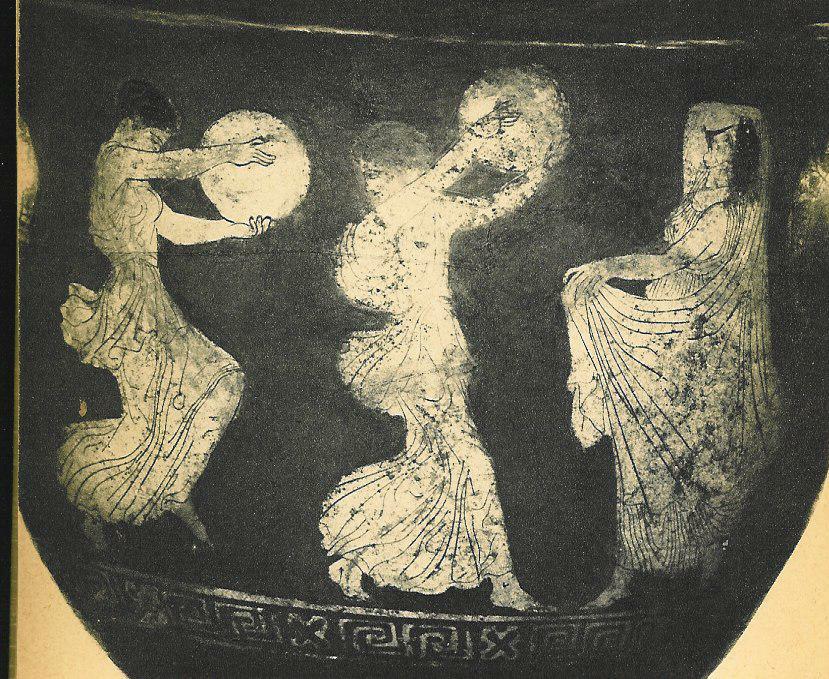
Last night, after reading my post about Berkeley and the spider, A. asked me about the point I was trying to make. I had to respond that honestly, I’m not sure. In one sense, it simply fascinates me that three philosophers who each took a stance against l’esprit geometrique are found in Southern Italy in the early eighteenth century. Vico turns to the ingenium, and Shaftesbury to common sense, as the intellectual force that resists the mechanization of the spirit - Berkeley, by contrast, traces the path of the skeptic and radicalizes l’esprit geometrique, in a way heralded by Pascal and Bayle – who also applied skepticism in the service of faith – but that goes far beyond them in its ontological conclusions. Yet, Berkeley’s response to Locke’s milktoast metaphysics contains an ambiguity, a pull between the ancients and the moderns, a re-constitution of the terms in which l’esprit geometrique is understood, that can be read as according, in the absence of the divine DJ, everything to the moderns.
Or to start again: metaphysics – I think I am trying to say – is anchored in life. When , in the 1790s, Cuoco criticizes the revolutionaries of Naples for favoring abstraction over the concrete interests of the people, he is in a sense echoing a theme we find in Berkeley’s A treatise concerning Human Knowledge, which contrasts abstraction – that fantastic product of the schools – to the mental processes of the great mass of men:
“To be plain, I own my self able to abstract in one Sense, as when I consider some particular Parts or Qualities separated from others, with which though they are united in some Object, yet, it is possible they may really Exist without them. But I deny that I can abstract one from another, or conceive separately, those Qualities which it is impossible should Exist so separated; or that I can frame a General Notion by abstracting from Particulars in the manner aforesaid. Which two last are the proper Acceptations of Abstraction. And there are Grounds to think most Men will acknowledge themselves to be in my Case. The Generality of Men which are Simple and Illiterate never pretend to abstract Notions. It is said they are difficult and not to be attained without Pains and Study. We may therefore reasonably conclude that, if such there be, they are confined only to the Learned.”
Plain speech, and plain people. This is the Berkeley who could share a dish of beans with a group of squatting peasants in a field. He is unafraid of popular contact – and that is one of the fundamental living impulses of democracy.
Berkeley’s preliminary work in countering the absurdities thrust upon us by abstraction – which is a process that never really occurs in any mind whatsoever, has no root in our biological life (ie is never found to occur among children who are acquiring language skills) is meant to prepare us for his self-evident truth:
“Some Truths there are so near and obvious to the Mind, that a Man need only open
his Eyes to see them. Such I take this Important one to be, to wit, that all the Choir of Heaven and Furniture of the Earth, in a word all those Bodies which compose the mighty Frame of the World, have not any Subsistence without a Mind, that their Being is to be perceived or known; that consequently so long as they are not actually perceived by me, or do not exist in my Mind or that of any other created Spirit, they must either have no Existence at all, or else subsist in the Mind of some eternal Spirit: It being perfectly unintelligible and involving all the Absurdity of Abstraction, to attribute to any single part of them an Existence independent of a Spirit. To be convinced of which, the Reader need only reflect and try to separate in his own Thoughts the being of a sensible thing from its being perceived.”
This is a tightly reasoned paragraph, and yet within it the innocent reader feels that somehow, what is happening here is a feint, or an out of bounds punch. A first reading – and one that became common in the 18th century – was that this was a plea for pure solipsism. Diderot, in the Essai sur les règnes de Claude et de Néron, remarks: “The bishop of Cloyne said: if I ascend to the heights of the mountains, or descend into the valleys, it is never anything but me that I apperceive: thus, it is possible that these don’t exist without me. And Berkeley still awaits an answer.” Diderot is a shrewd reader, but we – who can ascend to the heights of Berkeley commentators, or perhaps descend into the valley of their obsessions – have learned to read this paragraph differently, with an emphasis not on the moi – an emphasis that Diderot takes, unconsciously, from the whole French moraliste position – but rather on the tricky passive construction, “that their Being is to be perceived or known,” which leads us not to the imperial subject but to a fact about the choir of heaven that can only be expressed in the passive tense in English: that their very being is not ever to be separated from their being knowable or perceivable. Far from being accidents to which sovereign being submits – as a sort of royal sacrifice – being is essentially knowable or perceivable – the sovereign power is essentially a matter of election and, ultimately, of pressure. Berkeley’s is a world of pressures ultimately emanating, literally, from the hand of God. The combination of pressure and passivity finds its political correlate, perhaps, in the passive obedience Berkeley promoted in an early political pamphlet.
Still, Berkeley goes a long way to divest reality of any magic. The tarantula, its bite, the belief in the tarantalla, the doubts of the country doctor, are all real. “I do not argue against the Existence of any one thing that we can apprehend, either by Sense or Reflexion. That the things I see with mine Eyes and touch with my Hands do exist, really exist, I make not the least Question. The only thing whose Existence we deny, is that which Philosophers call Matter or corporeal Substance. And in doing of this, there is no Damage done to the rest of Mankind, who, I dare say, will never miss it.” Again, one wonders whether this is a feint or an argument – for, with the most beneficient of smiles, here Berkeley slips matter, so much metaphysical waste, into the trashcan. This is not something mankind will miss – it is not part of our common property.
What is the end result of this logic? “But, say you, it sounds very harsh to say we eat and drink Ideas, and are clothed with Ideas. I acknowledge it does so, the word Idea not being used in common Discourse to signify the several Combinations of sensible Qualities, which are called Things: and it is certain that any Expression which varies from the familiar Use of Language, will seem harsh and ridiculous. But this doth not concern the Truth of the Proposition, which in other Words is no more than to say, we are fed and clothed with those Things which we perceive immediately by our Senses. The Hardness or Softness, the Colour, Taste, Warmth, Figure, and such like Qualities, which combined together constitute the several sorts of Victuals and
Apparel, have been shewn to exist only in the Mind that perceives them; and this is all that is meant by calling them Ideas.”
In this way, Berkeley’s thought radically humanizes the world – which is the distinct twist of the emergence of Western, vs. Eastern, idealism. For ideas don’t lead us to illusions – illusions, rather, are easily comprehended within the schema of ideas. The world that Berkeley, at trifling expense (we hardly miss the old terms), reconstitutes is literally the one handed to us – in keeping with the privilege accorded to touch in his system. ”The Ideas of Sight and Touch make two Species, intirely distinct and heterogeneous. The former are Marks and Prognostics of the latter. That the proper Objects of Sight neither exist without the Mind, nor are the Images of external Things, was shewn even in that Treatise. Though throughout the same, the contrary be supposed true of tangible Objects: Not that to suppose that vulgar Error, was necessary for establishing the Notion therein laid down; but because it was beside my Purpose to examine and refute it in a Discourse concerning Vision. So that in strict Truth the Ideas of Sight, when we apprehend by them Distance and Things placed at a Distance, do not suggest or mark out to us Things actually existing
at a Distance, but only admonish us what Ideas of Touch will be imprinted in our Minds at such and such distances of Time, and in consequence of such or such Actions. It is, I say, evident from what has been said in the foregoing Parts of this Treatise, and in Sect. 147, and elsewhere of the Essay concerning Vision, that visible Ideas are the Language whereby the governing Spirit, on whom we depend, informs us what tangible Ideas he is about to imprint upon us, in case we excite this or that Motion in our own Bodies.”
It is this sense in which Berkeley’s idealism, which seems to move us to Diderot’s misrepresentation of it, actually situates us under the new dispensation of the moderns. It does so even while seeming to take the idealistic path of a wholly non-European tradition. Vico and Shaftesbury’s humanism, on the other hand, opens a front that challenges the totality of modernity – a totality that modernity, that epoch of universal-making, can’t do without.
Subscribe to:
Posts (Atom)
-
 You can skip this boring part ... LI has not been able to keep up with Chabert in her multi-entry assault on Derrida. As in a proper duel, t...
 -
 Ladies and Gentlemen... the moment you have all been waiting for! An adventure beyond your wildest dreams! An adrenaline rush from start to...
 -
LI feels like a little note on politics is called for. The comments thread following the dialectics of diddling post made me realize that, ...